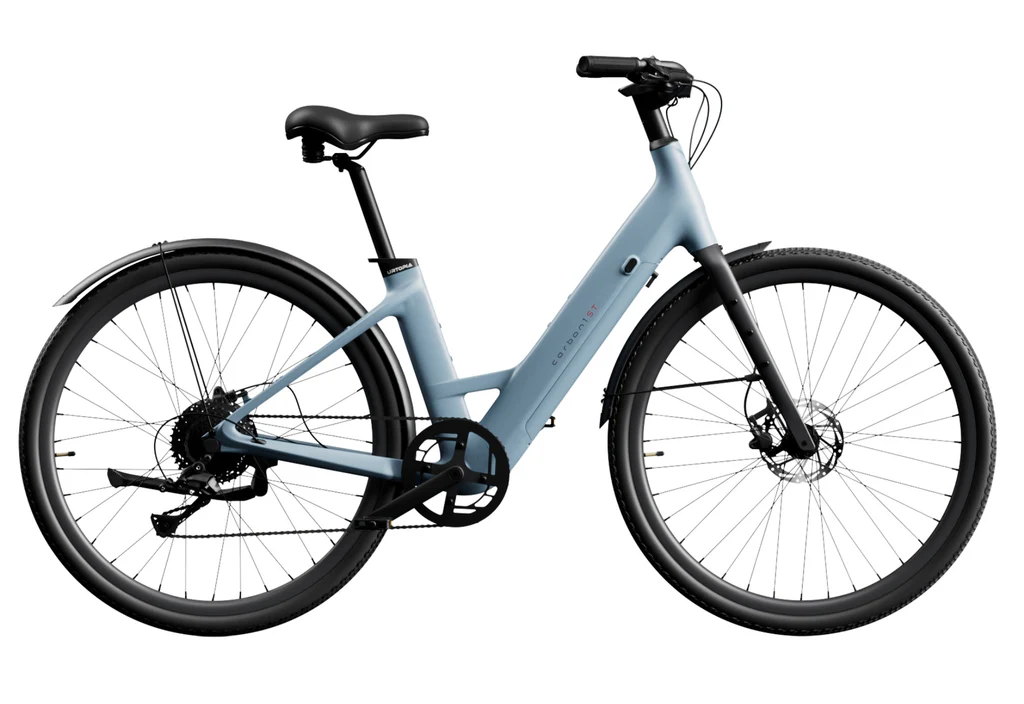
For decades, the two-car garage has been the undisputed symbol of American middle-class stability. One SUV for the family trips, and a secondary sedan or crossover for the daily commute, school runs, and grocery hauls. However, as the cost of vehicle ownership soars and urban congestion reaches a breaking point, a new contender is parked in that second stall. Families across the country are discovering that the best ebikes on the market today aren’t just toys for weekend trails—它们是 legitimate transportation powerhouses capable of handling 90% of a second car’s workload.
The Growing Trend of the One-Car Household
The shift toward a “car-light” lifestyle isn’t just about saving the planet; it’s about reclaiming the driveway. The average American car sits idle for about 95% of its life, yet it demands constant financial attention in the form of insurance, registration, and depreciating value. The “driveway anchor” problem is real: that second vehicle is often the most expensive utility bill a family pays.
By integrating an e-bike into the daily routine, the “second car” shifts from a heavy, fossil-fuel-dependent machine to a nimble, electric-assist frame that can bypass gridlock. This isn’t a return to the sweat-soaked cycling of the past. Modern motor technology provides a “tailwind on demand,” allowing riders to traverse five to ten miles with the same physical effort it takes to walk down the hallway. It’s the sweet spot of mobility—faster than a car in city traffic, but more versatile than a bus or train.
Breaking Down the True Cost of Car Ownership
When people calculate the cost of a second car, they often look only at the monthly loan payment and the gas tank. This is a massive financial oversight. According to AAA, the average annual cost to own and operate a new vehicle in 2024 topped $12,000. That includes “silent killers” like staggering insurance premiums, which have seen double-digit increases in many states, and the relentless march of depreciation.
In contrast, the ROI of an electric bike is startlingly fast. Even a premium, top-tier model—outfitted with heavy-duty racks and high-capacity batteries—represents a one-time investment that usually pays for itself within six to twelve months of avoiding gas, parking fees, and oil changes. Furthermore, many U.S. states and municipalities, from Colorado to California, are now offering “E-bike Rebates” that can shave hundreds or even thousands of dollars off the initial purchase price, making the barrier to entry lower than ever.
Solving the Logistics of Everyday Errands
The most common argument against ditching the second car is: “But how will I carry the groceries?” This is where the cargo bike revolution comes in. The rise of the “Long-Tail” cargo bike—which features an extended rear rack—has turned the weekly supermarket run into a non-event. With high-volume waterproof panniers and a front-mounted basket, these bikes can easily carry four to five bags of groceries or a couple of cases of beverages without compromising stability.
Then there is the “School Drop-Off Revolution.” In suburbs and urban centers alike, the morning “car line” at elementary schools is a source of universal frustration. Parents who have switched to e-bikes often report that their children look forward to the ride. Strapped into a secure rear seat or sitting in a front-loading “bucket” bike, kids get a front-row seat to their neighborhood. They arrive at school stimulated and refreshed, rather than lethargic from sitting in a climate-controlled backseat while their parents stress over traffic.
Overcoming the American Distance Problem
Critics often point to the sheer scale of American infrastructure as a deal-breaker for cycling. “Everything is too far apart,” they say. While it’s true that American suburbs were built for cars, the geography of our lives is often smaller than we realize. Data shows that roughly 50% of all car trips in the U.S. are under three miles. That is the “Goldilocks Zone” for an electric bike.
Pedal-assist technology effectively “shrinks” the city. A five-mile trip that would be daunting on a traditional bicycle becomes a 15-minute breeze on an electric one. More importantly, it solves the “Sweat Factor.” You can ride to a business meeting or a dinner date in professional attire, use the motor to do the heavy lifting on the hills, and arrive looking exactly as you did when you left the house. For those rare days when the weather is truly abysmal—a torrential downpour or a blizzard—the money saved by not owning a second car can easily fund a year’s worth of occasional Uber or Lyft rides.
The Infrastructure Reality Check
We have to be honest: replacing a car requires a mental shift in how you navigate your town. You cannot always follow the same path the GPS gives a car. Successful e-bike adopters learn to map out “low-stress” routes. This might mean adding half a mile to the trip to stay on a dedicated greenway, a quiet residential “slow street,” or a protected bike lane rather than battling a four-lane arterial road.
Security is the other half of the equation. A $3,000 e-bike is a high-value target. However, the tech has kept pace with the risk. Modern riders utilize a “layered defense”: heavy-duty U-locks, vibration-sensitive alarms, and hidden GPS trackers like AirTags or integrated proprietary systems. Many insurance companies now offer specific e-bike policies that cover theft and damage for a fraction of the cost of an auto policy, providing peace of mind for those who have to lock up on the street.
Trading Road Rage for Mental Clarity
Beyond the spreadsheets and the logistics, there is a profound psychological benefit to the car-light lifestyle. Driving in heavy traffic is a high-cortisol activity. It isolates us in metal boxes, disconnected from our environment, and often leads to “road rage” over the smallest slights.
Transitioning to an e-bike turns a soul-crushing commute into a moment of wellness. It’s an “active commute” that provides a low-impact cardiovascular workout, a dose of Vitamin D, and a sense of connection to the community. You see the flowers blooming in your neighbor’s yard; you smell the local bakery; you wave to people you’d never notice through a tinted windshield. For many, this mental clarity is the real reason they never go back to the two-car lifestyle.
Conclusion
The verdict is clear: An e-bike cannot replace every car in America, but it is more than capable of replacing the second car. The “One Car, One Bike” household is becoming the new gold standard for the modern American family. It represents a hedge against inflation, a commitment to a healthier lifestyle, and a practical solution to urban congestion.
Selling the spare keys and investing in a high-quality electric bike isn’t just a transport decision—it’s a declaration of independence from the skyrocketing costs of a car-centric life. As infrastructure continues to catch up with the demand, the only question left for most families won’t be “Can I replace my second car?” but “Why didn’t I do this sooner?”