Why Electrical Safety Deserves More Attention
Managing rental property involves constant coordination — maintenance, documentation, tenant communication, and legal compliance.
Electrical systems, however, are often out of sight and therefore out of mind. Many landlords only consider them when:
- A tenant reports a fault
- A compliance deadline approaches
- Power issues suddenly occur
In reality, preventative inspections are far more effective than reactive repairs. This is where EICR checks play a crucial role.
What an EICR Actually Covers
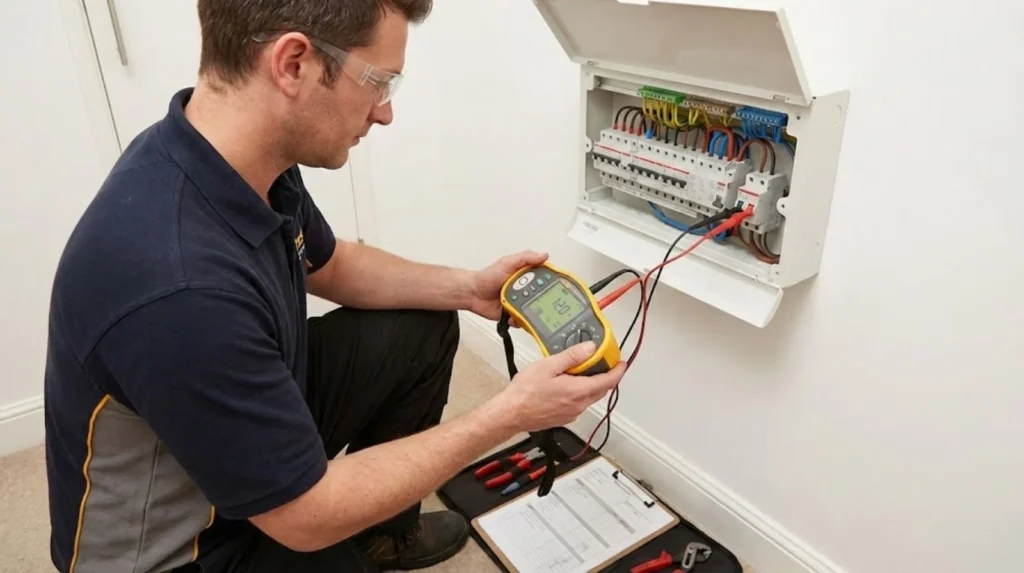
An Electrical Installation Condition Report (EICR) is a formal inspection of the fixed wiring system within a property.
It does not cover tenant appliances. Instead, it focuses on:
- Internal wiring
- Consumer unit (fuse board)
- Sockets and switches
- Lighting circuits
- Earthing and bonding systems
A qualified electrician in London performs structured testing to confirm that the installation is safe and operating correctly.
Think of it as a full health assessment for the building’s electrical infrastructure — not a cosmetic upgrade, but a safety evaluation.
Why Landlords Benefit Most from Regular EICR Checks
Unlike homeowners, landlords are not present in the property every day. They may not notice subtle warning signs such as:
- Warm sockets
- Buzzing switches
- Intermittent power loss
- Light burning odours under heavy load
Tenants may overlook these issues or delay reporting them.
Routine inspections carried out by professional electrical services in Fulham provide an independent evaluation of the system’s condition. This removes guesswork and reduces reliance on reactive maintenance.
For landlords, EICR checks are not just about compliance — they are about risk management.
Common Issues an EICR Can Identify Early
Electrical faults rarely appear overnight. They develop gradually.
An EICR may detect:
- Overloaded circuits
- Ageing wiring systems
- Loose internal connections
- Inadequate earthing
- Heat-damaged components
- Unsafe DIY alterations
On the surface, these problems may seem minor. Over time, they can increase the likelihood of electrical failure or fire.
Early detection keeps repairs manageable and predictable.
How Electrical Safety Influences Tenant Confidence
Tenants feel more secure in properties where safety inspections are clearly documented and up to date.
When landlords engage reliable electrical services in Fulham, it:
- Demonstrates professionalism
- Encourages tenants to report issues early
- Reduces disputes
- Improves long-term tenancy relationships
Safety transparency builds trust.
The Financial Perspective: Prevention vs. Emergency
Some landlords see EICR checks as an added cost. In practice, they are preventative investments.
Repairing a minor wiring fault identified early is usually straightforward. Addressing electrical damage after a failure or fire is significantly more expensive.
Working with a qualified electrician in London allows landlords to plan maintenance instead of facing unexpected emergency repairs.
What Happens During the Inspection Process
During an EICR, a professional will typically:
- Test each electrical circuit
- Inspect switches, sockets, and fittings
- Check RCD safety devices
- Assess earthing and bonding
- Compare the installation against current safety standards
The final report categorises findings clearly, allowing landlords to understand:
- What requires immediate attention
- What is recommended for improvement
- What remains satisfactory
Clear documentation simplifies decision-making.
Why Choosing the Right Electrician Matters
An EICR should be thorough, impartial, and clearly explained.
Engaging experienced electrical services in Fulham ensures:
- Accurate testing procedures
- Clear communication
- Practical advice
- Proper documentation for compliance
A dependable London Electrician does not create unnecessary work — they provide clarity about what genuinely needs attention.
Final Thoughts for Landlords
Electrical safety is not about waiting for faults to appear. It is about maintaining predictability and reducing risk.
Keeping EICR inspections up to date allows landlords to:
- Stay compliant
- Protect tenants
- Prevent costly emergencies
- Manage properties with greater confidence
When approached proactively, electrical inspections simplify property management rather than complicating it — making them an essential part of responsible landlord practice.