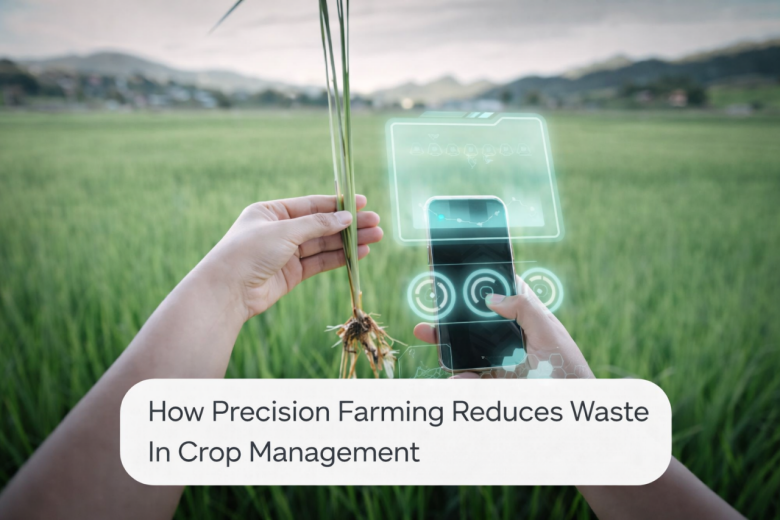
The need to use fewer resources in food production is one of the most serious threats to contemporary agriculture. Fertilizers, fuel, water, and pesticides are not cheap, and over-exploitation of these resources may harm the environment.
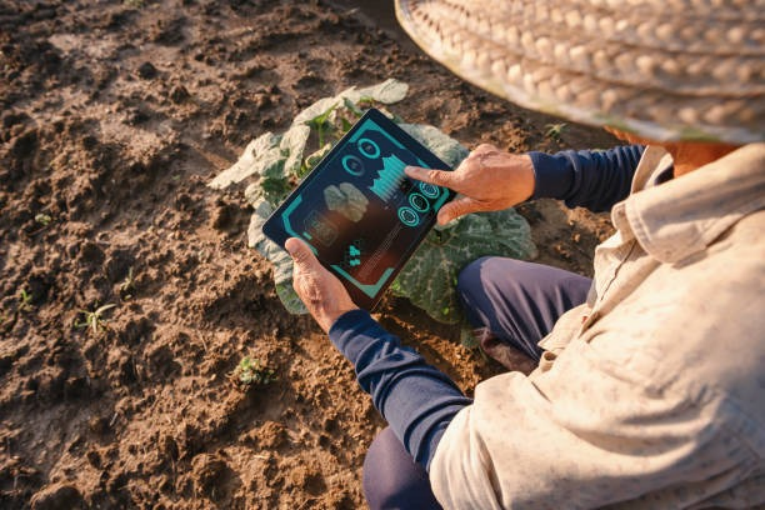
The farmers are therefore considering smart ways to manage crops while producing. Precision farming is one of the most promising solutions in agriculture. Precision farming employs high-tech sensors, drones, GPS, and data analytics to monitor crop and soil conditions in real time.
The farmers are now able to treat different areas based on requirements, rather than treating a whole field with the same resources. It is an intensive plan that helps boost efficiency and reduce unnecessary waste.
Following the application of data in decision-making, farmers have been able to apply the right levels of inputs at the right place and right time. What will come of this is healthier crops, lower production costs, and a more sustainable farming system.
Read this guide to understand why precision farming is becoming a significant method in crop management today.
What Is Precision Farming?
Precision farming in agriculture is a data-driven technology that enables farmers to manage crops more precisely. Precision agriculture does not treat farm acreage as homogeneous; instead, it acknowledges that soils, nutrient content, and water content can vary across different areas of a field.
Drones, satellite imagery, soil sensors, and GPS mapping technologies also help farmers obtain precise data on crop health and soil conditions. With such tools, they can study trends in plant growth, water availability, and nutrient availability.
For instance, yield mapping systems determine crop productivity across various parts of agricultural land. This data helps farmers know where they will achieve higher or lower output and adjust their management techniques.
When farmers use fertilizers, water, and pesticides on a need basis, they can significantly reduce waste while improving crop performance.
4 Ways Precision Farming Reduces Waste In Crop Management
1. Targeted Use of Fertilizers and Pesticides
The uniform use of fertilizers and pesticides is one of the biggest contributors to waste in the traditional agricultural industry. These inputs are usually applied across the entire field, yet there are areas where they may not be necessary.
Precision farming alters this practice through technologies such as variable-rate application systems. Such systems enable farm machinery to spread varying quantities of fertilizers or chemicals based on the requirements of certain regions within a field.
Field sensors, aerial sensors, and field data help the farmer determine which areas need nutrients or pest control. They can deal with affected areas, not the whole field. This is a highly focused method that helps reduce the use of unnecessary chemicals while still safeguarding crops.
Early detection is also essential. Advanced imaging can identify plant stress, nutrient deficiencies, or pest damage before they are visible to the human eye. Knowing this, farmers can react quickly and prevent problems from developing, further reducing the need for large-scale chemical use.
2. Efficient Water Management
Water waste is another major issue in agriculture, particularly in regions that rely on irrigation. Conventional irrigation systems provide a uniform distribution of water across fields, despite soil moisture levels varying widely.
Precision farming enhances water use by using soil moisture sensors, satellite imagery, and thermal imaging to monitor soil moisture. The technologies can also help farmers know precisely where water is required and where it is unnecessary.
By issuing this information, the irrigation systems can be modified to provide water only to the dry areas and spare the areas where moisture is already present. This ensures that one does not overwater the garden, thus using less water and conserving water resources.
Thermal sensors on drones can also map moisture content in farmland, enabling farmers to track irrigation effectiveness. Through better water management, farms can minimize wastage without compromising crop well-being.
3. Early Detection of Crop Problems
Diseases and pest attacks may spread rapidly across farmlands. Farmers mostly react to late-discovered problems by pouring large quantities of pesticides or fertilizers across the entire field, in an attempt to contain the damage.
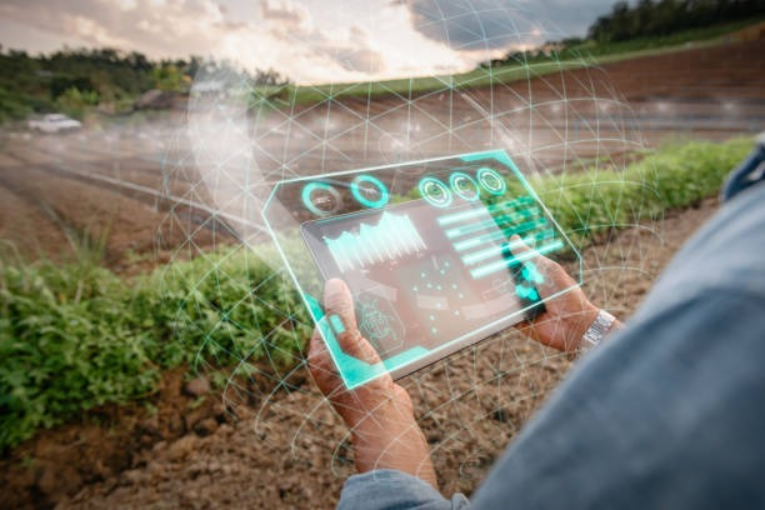
Precision farming is one way to mitigate this wastage by using early-detection mechanisms. Drones, multispectral cameras, and artificial intelligence-powered monitoring systems are used to assess plant well-being and detect warning signs of stress before they manifest.
These technologies can detect changes in plant color, growth patterns, and temperature, which could be signs of disease or nutrient deficiencies. When farmers can detect affected areas, they can treat them as needed.
Such specific reactions prevent overuse of chemicals and minimize environmental impact. It is also useful for ensuring crop yields by preventing issues from spreading across large areas of farmland.
4. Data Driven Soil Management
Soil conditions often vary greatly even within the same field. Some spots might have high nutrient concentrations, whereas other areas might be deficient in essential minerals that support plant growth.
Conventional agricultural practices assume that the soil is homogeneous, leading to the unjustified use of fertilizers and poor crop management.
Precision farming will address this problem through soil mapping and sensor data. Innovative monitoring systems help assess soil characteristics, including nutrient content, moisture content, pH balance, and electrical conductivity.
Modern technologies, such as LiDAR technology, can even produce extremely detailed maps of agricultural areas. The maps enable farmers to know how different regions have different soil structures and fertility.
Farmers can use the appropriate amount of fertilizer at the right time, provided they have the right soil data. This will avert over-application of nutrients, minimize runoff into adjacent water systems, and yield crops with adequate nutrients to grow well.
Conclusion
Precision farming is transforming how farmers manage crops, making them more efficient and reducing waste. Farmers can better understand their fields’ needs with technologies such as drones, soil sensors, GPS-guided production, and data analytics.
Precision agriculture does not require farmers to use resources uniformly across the farmland; instead, it enables them to address each region individually based on its conditions. This leads to smarter irrigation, more precise fertilizer application, fuel savings, and healthier crops.
With the agricultural industry still struggling with environmental and financial challenges, precision farming offers a way forward by enabling farmers to produce more food while conserving valuable resources.