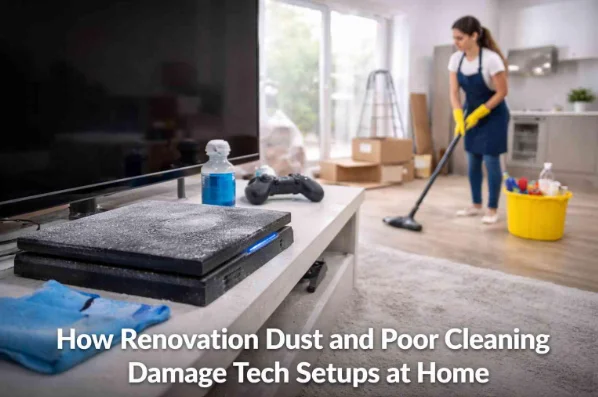
Modern homes rely heavily on technology. Gaming consoles, personal computers, smart home systems, and home entertainment setups have become part of everyday living. When renovation work takes place, most attention is given to design, materials, and construction quality. What is often overlooked is how renovation dust and incomplete cleaning can quietly damage these tech-heavy environments.
Even small renovation projects can introduce fine particles that linger long after work is completed. These particles do not simply settle on visible surfaces. They move through the air, collect inside electronics, and remain hidden in places that regular cleaning does not reach. Over time, this can affect device performance, indoor comfort, and long-term maintenance costs.
Understanding the relationship between renovation dust, cleaning quality, and technology protection is essential for anyone living in a tech-focused home.
Why Renovation Dust Is More Harmful Than It Looks
Renovation dust is different from everyday household dust. It often contains fine particles from drywall, cement, wood, insulation, and adhesives. These materials are lightweight and easily airborne, allowing them to travel throughout the home during and after renovation work.
Once in the air, dust settles into areas that are difficult to access. Cooling vents, fan intakes, cable ports, and internal device components are common collection points. Because these particles are so fine, they can bypass basic surface cleaning and remain undetected until problems appear.
In tech-heavy households, this type of dust poses a higher risk. Electronics rely on airflow to regulate temperature. When dust blocks vents or coats internal components, heat builds up faster and devices are forced to work harder to maintain performance.
The Impact of Dust on Gaming and Home Electronics
Gaming consoles, desktop PCs, and media systems are particularly sensitive to dust exposure. These devices generate heat during use and depend on internal fans to circulate air. Fine dust interferes with this process, reducing airflow and increasing operating temperatures.
Over time, dust build-up can lead to performance throttling, louder fan noise, and unexpected shutdowns. In more severe cases, components may degrade prematurely, leading to costly repairs or replacements.
Smart home devices are also affected. Sensors, cameras, and control units are often installed in fixed positions and left untouched for long periods. Dust accumulation can reduce sensor accuracy and interfere with connectivity, especially in environments where renovation residue has not been properly removed.
Why Regular Cleaning Is Not Enough After Renovation
Many homeowners assume that standard cleaning routines will handle post-renovation mess. While these routines are effective for daily maintenance, they are not designed to address renovation-related residue.
Regular cleaning focuses on visible surfaces and commonly used areas. It rarely addresses ventilation paths, high-level fixtures, or hidden spaces behind furniture and appliances. As a result, fine dust remains in circulation even after the home appears clean.
In tech-centric homes, this creates a false sense of security. Devices continue to draw in contaminated air, and dust continues to accumulate internally. Without targeted cleaning, the problem persists beneath the surface.
The Role of Structured Cleaning After Renovation
Post-renovation environments require a structured approach to cleaning. This involves addressing dust at multiple levels, from visible surfaces to concealed areas that affect airflow and system performance.
Effective post-renovation cleaning focuses on removing fine particles before normal living resumes. It targets areas such as vents, skirting lines, light fixtures, storage spaces, and appliance surroundings. This approach reduces the risk of dust migration and protects sensitive equipment.
In urban homes where renovation work is common and space is limited, residents often rely on a reliable house cleaning service to help manage this transition effectively. This is not about convenience alone, but about ensuring that the home environment is genuinely safe and functional after renovation work ends.
Renovation Dust and Indoor Air Quality
Dust left behind after renovation does not remain static. It circulates through the home, affecting indoor air quality long after construction is completed. This can be especially noticeable in air-conditioned environments where airflow is constant.
Poor air quality impacts comfort and may contribute to irritation or allergies. More importantly for tech users, airborne particles increase the rate at which dust enters electronic devices. The cleaner the surrounding air, the less stress is placed on cooling systems and internal components.
Addressing air quality after renovation is not just a health consideration. It is also a practical step in protecting long-term device performance.
Why Tech-Focused Homes Need a Different Cleaning Mindset
Homes built around technology require a different approach to post-renovation care. Unlike traditional living spaces, these environments contain multiple devices that operate continuously and generate heat.
Cleaning methods must account for airflow patterns, device placement, and dust-prone zones. Simply wiping surfaces does not address the root of the problem. Dust must be removed from the environment itself, not just relocated.
This is where a post renovation cleaning service becomes relevant. These services are designed to deal with construction-related residue, focusing on thorough dust removal rather than surface appearance alone. For tech-heavy households, this level of cleaning helps prevent issues before they develop.
Common Mistakes Homeowners Make After Renovation
One of the most common mistakes is moving electronics back into place too quickly. When devices are reinstalled before proper cleaning is completed, they immediately begin drawing in contaminated air.
Another mistake is relying on household vacuum cleaners that are not designed for fine construction dust. These machines may redistribute particles instead of removing them effectively, making the problem worse.
Homeowners may also overlook areas such as network cabinets, cable management zones, and behind entertainment units. These spaces often accumulate significant dust but are rarely included in standard cleaning routines.
Avoiding these mistakes requires planning and an understanding of how renovation dust behaves within a home environment.
Long-Term Effects on Device Lifespan
Dust-related stress does not always cause immediate device failure. Instead, it accelerates wear over time. Fans work harder, components operate at higher temperatures, and internal parts degrade faster than expected.
This gradual decline often goes unnoticed until performance issues arise. By the time problems are visible, internal damage may already be significant.
Addressing renovation dust properly reduces long-term strain on electronics. It helps maintain stable operating conditions and extends the usable lifespan of devices that represent a substantial financial investment.
Protecting Home Entertainment and Smart Systems
Home entertainment systems, including televisions, sound systems, and streaming devices, are also affected by dust. These systems often sit idle for long periods, allowing dust to settle inside ports and vents.
Smart home hubs and controllers are typically placed in central locations and left undisturbed. Dust accumulation in these devices can lead to connectivity issues and reduced responsiveness.
Post-renovation cleaning that considers these systems helps ensure they function as intended. It also reduces the need for frequent maintenance and troubleshooting.
Practical Considerations for Tech-Heavy Homes
For households that rely heavily on technology, cleaning should be considered part of the renovation process rather than an afterthought. Planning for proper cleaning before reinstalling devices helps protect both comfort and performance.
Timing matters. Cleaning should take place after all renovation work is complete but before electronics are reintroduced. This allows dust to be removed at its source rather than captured inside devices.
By treating post-renovation cleaning as a technical safeguard rather than a cosmetic task, homeowners can protect their living environment and the technology that supports it.