
QuickSwap is a decentralized exchange designed to make crypto trading faster, cheaper and more accessible for everyday users. Built originally on the Polygon network QuickSwap allows people to swap digital assets directly from their wallets without relying on centralized intermediaries.
This non-custodial approach gives users full control over their funds while benefiting from low transaction fees and rapid confirmation times. What sets QuickSwap apart is its focus on efficiency and community driven growth. Instead of using traditional order book the platform relies on an automated market maker system where liquidity pools power every trade.
This structure removes the need for buyers and sellers to be matched directly ensuring that swaps can happen instantly at any time. As decentralized finance continues to expand, QuickSwap has positioned itself as a practical solution for traders, liquidity providers, and DeFi users who value speed, transparency and cost efficiency.
How Does QuickSwap Work as a Decentralized Exchange?
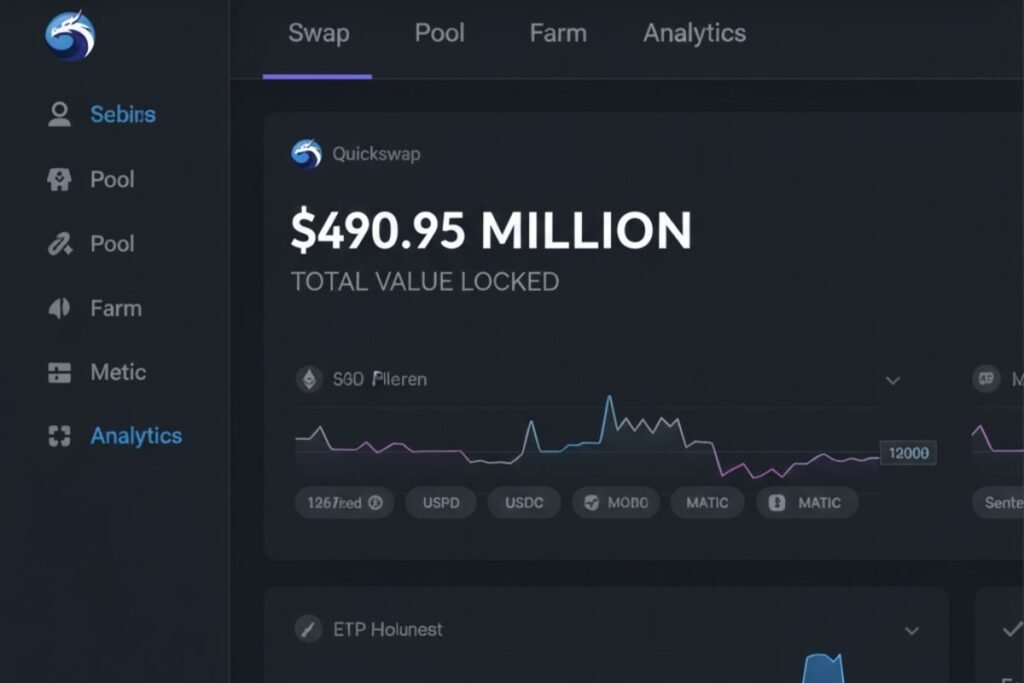
QuickSwap operates using smart contracts that automatically execute trades based on predefined mathematical formulas. When users swap tokens, they interact with liquidity pools funded by other users who deposit token pairs into the protocol.
These liquidity providers earn a portion of trading fees as compensation for supporting the ecosystem. Because everything runs on-chain, trades are trustless and transparent.
Users do not need to open accounts, submit identity documents or hand over custody of their assets. Transactions are executed directly from personal wallets, which significantly reduces counterparty risk.
This decentralized structure makes cricut quick swap housing especially attractive in an era where users are increasingly cautious about centralized exchange failures and asset freezes.
Why Was QuickSwap Built on Polygon and Other EVM Chains?
QuickSwap was initially launched on Polygon to solve a major problem faced by Ethereum users: high gas fees and slow transaction times. Polygon offers a scalable layer that processes transactions faster and at a fraction of the cost compared to Ethereum mainnet.
This makes frequent trading, small swaps and yield farming economically viable for a much broader audience. Over time, Quick Swap expanded beyond Polygon to support multiple EVM-compatible networks.
This multi-chain strategy reduces dependency on a single blockchain and allows users to access DeFi opportunities across different ecosystems. By supporting various networks, QuickSwap ensures flexibility, resilience and long term scalability.
What Is the QUICK Token and What Is Its Role?
The QUICK token is the native utility and governance token of the QuickSwap ecosystem. It plays a central role in aligning incentives between users, liquidity providers and the protocol itself. Token holders can stake QUICK to earn rewards, participate in governance decisions and influence the future development of the platform.
In addition to governance, QUICK supports ecosystem sustainability through mechanisms such as buybacks and token burns funded by protocol revenue. These features aim to manage supply dynamics and reward long term participants rather than short term speculators.
As the ecosystem grows, the utility of QUICK extends beyond trading into governance, incentives and cross chain expansion.
What Is the Current QuickSwap (QUICK) Price and Live Market Overview?
The price of QuickSwap’s native token fluctuates continuously based on market demand, trading activity and broader cryptocurrency trends. Live price data reflects real-time sentiment and allows users to track market movements as they happen.
This information is essential for traders making time sensitive decisions and for long term holders monitoring performance. Beyond price, metrics such as trading volume, circulating supply and market capitalization provide deeper insight into the health of the Quick Swap ecosystem.
These indicators help users understand liquidity conditions, adoption levels and overall market confidence in the project.
How Is QuickSwap’s Daily Trading Volume Calculated?
Daily trading volume represents the total value of QUICK tokens exchanged within a 24 hour period across supported markets. This metric is a key indicator of liquidity and user activity. Higher trading volume usually suggests strong interest and easier trade execution, while lower volume may indicate reduced participation or temporary market consolidation.
Consistent trading volume over time often reflects a stable user base and ongoing protocol usage rather than short lived hype. For decentralized exchanges, volume is especially important because it directly affects liquidity provider incentives and overall platform efficiency.
What Are the Highest and Lowest Prices QuickSwap Has Reached?
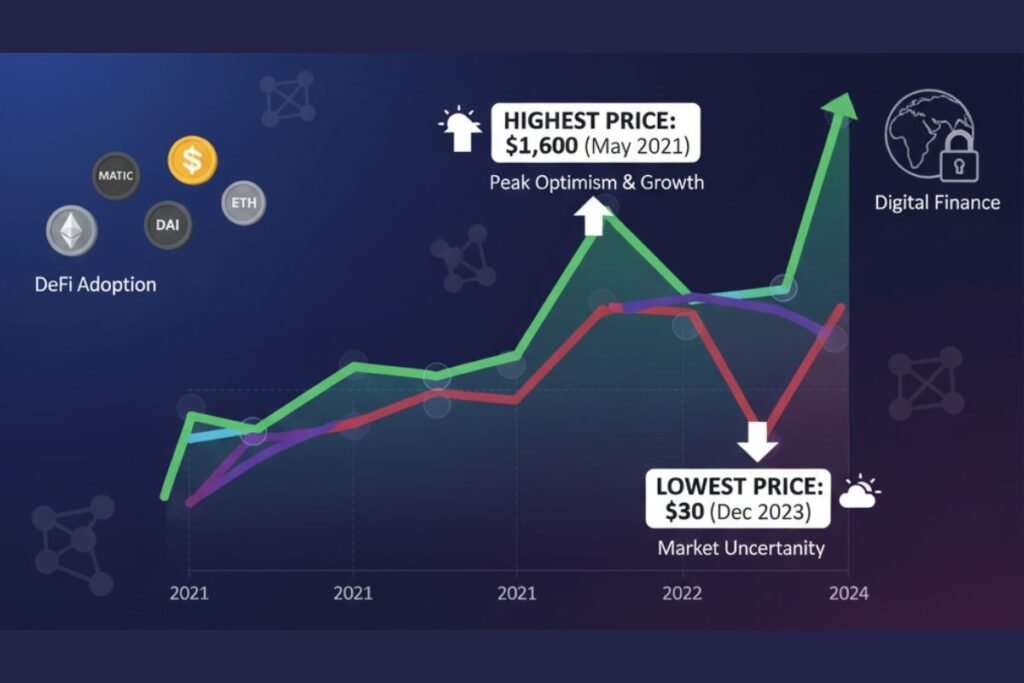
QuickSwap has experienced significant price movements throughout its history, reflecting both bullish market cycles and broader crypto downturns.
Its highest recorded price represents periods of peak optimism, ecosystem growth and increased DeFi adoption. Conversely, its lowest price points highlight times of market uncertainty or reduced risk appetite.
Understanding these historical extremes helps users evaluate volatility and set realistic expectations. Instead of focusing only on short term fluctuations, examining long term price behavior provides a clearer picture of the asset’s risk profile.
What Does Market Capitalization Tell Us About QuickSwap?
Market capitalization shows a token’s total value, calculated by combining the circulating supply with its latest market price. This figure offers a snapshot of how the market values QuickSwap relative to other cryptocurrencies.
A moderate market cap often signals growth potential while indicating that the project has already achieved meaningful adoption. For investors and users alike market capitalization helps contextualize price movements.
A small price change in a lower market cap asset can represent a larger percentage shift than the same movement in a high market cap project.
What Is Fully Diluted Valuation and Why Does It Matter?
Fully diluted valuation estimates the total market value of Quick Swap assuming all tokens in the maximum supply are eventually released. This metric is particularly useful for understanding long-term token economics and potential future dilution.
By comparing market cap and fully diluted valuation users can assess how token supply changes might impact price over time. This perspective is essential for long-term holders evaluating sustainability rather than short term price action.
How Does QuickSwap’s Performance Compare With Similar DeFi Projects?
When compared with other decentralized exchanges and Polygon based DeFi platforms, QuickSwap often stands out for its speed, low fees and multi-chain support.
Its performance generally aligns with broader DeFi trends, rising during periods of increased on-chain activity and declining during market wide downturns.
Relative performance analysis allows users to determine whether Quick Swap is gaining market share or lagging behind competitors. This comparison is especially valuable for users deciding where to allocate liquidity or long term capital.
Where Can Users Buy QuickSwap (QUICK) Tokens?
QuickSwap tokens are available on a variety of centralized and decentralized exchanges. Centralized platforms typically offer higher liquidity and ease of use, while decentralized exchanges provide greater control and privacy.
Choosing where to buy depends on user experience, security preferences and regional availability. Regardless of the platform, users should always verify trading pairs, double check token contracts and consider current market conditions before purchasing.
How Can QUICK Be Added to MetaMask Wallet?
Adding QUICK to MetaMask allows users to view their holdings, interact with DeFi applications, and participate fully in the QuickSwap ecosystem. This process involves importing the token contract so the wallet can recognize and display the asset.
Once added, QUICK becomes accessible for swaps, staking, governance voting and liquidity provision making MetaMask a practical gateway to decentralized finance participation.
How Secure Is QuickSwap for DeFi Users?
QuickSwap prioritizes security through audited smart contracts, transparent on chain operations, and open source development. Security audits conducted by independent firms help identify vulnerabilities before they can be exploited. Formal verification and continuous code reviews further strengthen protocol integrity.
Despite these measures, users are encouraged to practice personal security habits such as using hardware wallets and verifying transaction details. In decentralized finance, shared responsibility between protocol and user is essential.
What Are the Real World Use Cases of QuickSwap?
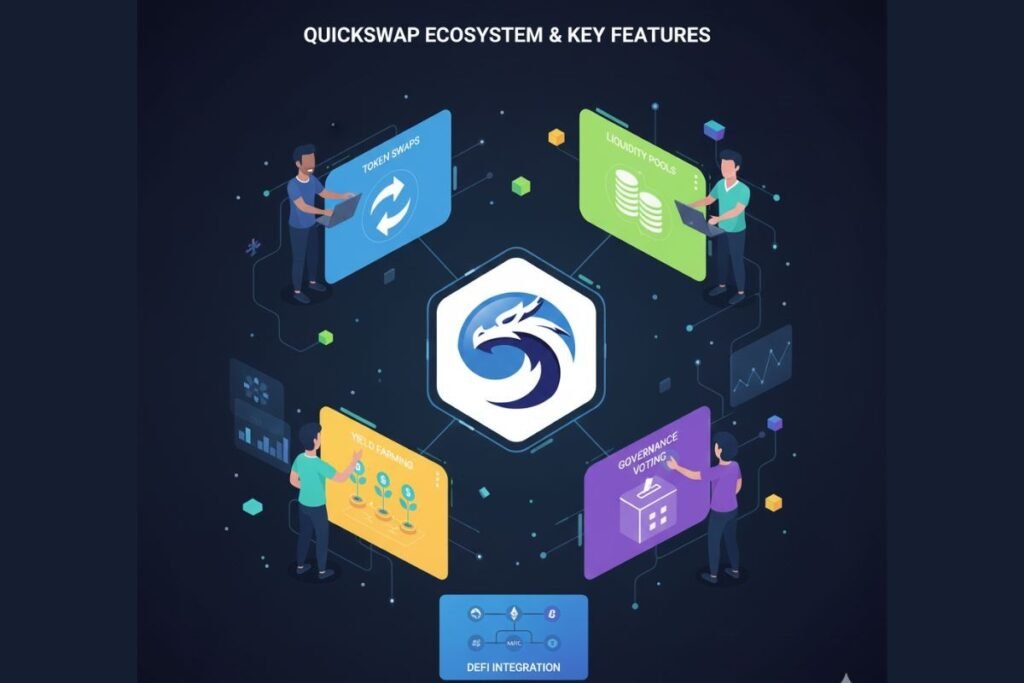
QuickSwap supports a wide range of real world DeFi activities, including token swaps, liquidity provision, yield farming and governance participation. Developers also use the platform as infrastructure for launching and supporting decentralized applications.
By enabling fast and affordable transactions, QuickSwap lowers the barrier to entry for users who might otherwise be excluded from DeFi due to high fees or technical complexity.
Conclusion
QuickSwap has established itself as more than just a decentralized exchange by combining speed, affordability and decentralization into a single ecosystem. Its use of automated market makers, low fee networks and multi chain expansion makes it accessible to both new and experienced users.
The QUICK token adds depth through governance and incentives, aligning community interests with platform growth. Transparent pricing data and robust security practices further enhance trust.
As DeFi continues to evolve, QuickSwap’s adaptability and user focused design position it as a lasting force in decentralized finance. For users seeking control, efficiency and innovation QuickSwap remains a compelling choice.
FAQs
Is QuickSwap suitable for beginners in decentralized finance?
Yes, its interface is user friendly, but beginners should still understand wallet security and basic DeFi concepts.
Does QuickSwap charge high fees for trading?
No, it is known for low transaction fees, especially on Polygon and similar networks.
Can QuickSwap be used without holding QUICK tokens?
Yes, users can swap tokens without holding QUICK though holding it unlocks additional benefits.
Is QuickSwap affected by Ethereum network congestion?
On supported layer 2 and EVM networks, congestion impact is minimal compared to Ethereum mainnet.
Does QuickSwap support long-term DeFi participation?
Yes, features like staking, governance, and liquidity provision support long term involvement.





![Pepper0] family (1-40) {ongoing}](https://pepper0.com/wp-content/uploads/2025/09/Untitled-design-2025-09-09T180233.424-300x164.jpg)