Have you read or come across a term called ‘technostress’?
If yes, then you know how it feels. But if not, then to put it simply, it’s nothing but the stress that comes from using technologies that don’t help or worse— hinder your work.
Why have I brought this up? Well, the US healthcare system is going through this technostress right now. Generic and rigid EHR systems with one-size-fits-all templates, disconnected workflows, and siloed patient data are hindering providers rather than helping them.
In the rush of digital transformation, Most clinicians adopted off-the-shelf EHR systems, leading to siloed data and inefficient care management. However, many forgot to ask a crucial question: Does the EHR match how we actually work?
However, modern healthcare can’t function in these silos, and it’s time clinics moved from generic to specific. Clinics need a system that adapts to their workflows, specialties, and patient needs— and that’s exactly where custom EHR software development steps in.
However, before going straight to build a custom EHR, understanding what a custom EHR is and how the custom healthcare software development happens is important.
That’s why, in this blog, we will be exploring the what and why of building a custom EHR software specifically for your clinic and how it helps you move from generic to specific EHR systems.
So, let’s dive in without further ado!
What Is a Custom EHR Solution?
Well, many healthcare providers have many misconceptions about custom EHR solutions. So, let’s first look at what a custom EHR solution is. If I have to define it, then a custom EHR solution is an EHR system built specifically to fit your workflows, practice-specific needs, and to match how you actually work.
These systems are completely opposite to off-the-shelf solutions, which come with rigid templates and limited customization. With a custom EHR, you can customize templates, add features you need, and seamlessly integrate with other systems.
In short, everything from charting to care plans and billing rules is designed around how the clinic works rather than forcing the clinic to adapt to the software. And this is why many US clinics are transitioning to custom EHR software.
With EHR customization, clinics get more flexibility, robust interoperability, and a HIPAA-compliant EHR, automatically eliminating unnecessary clicks and compliance risks.
Core Elements of Custom EHR Development
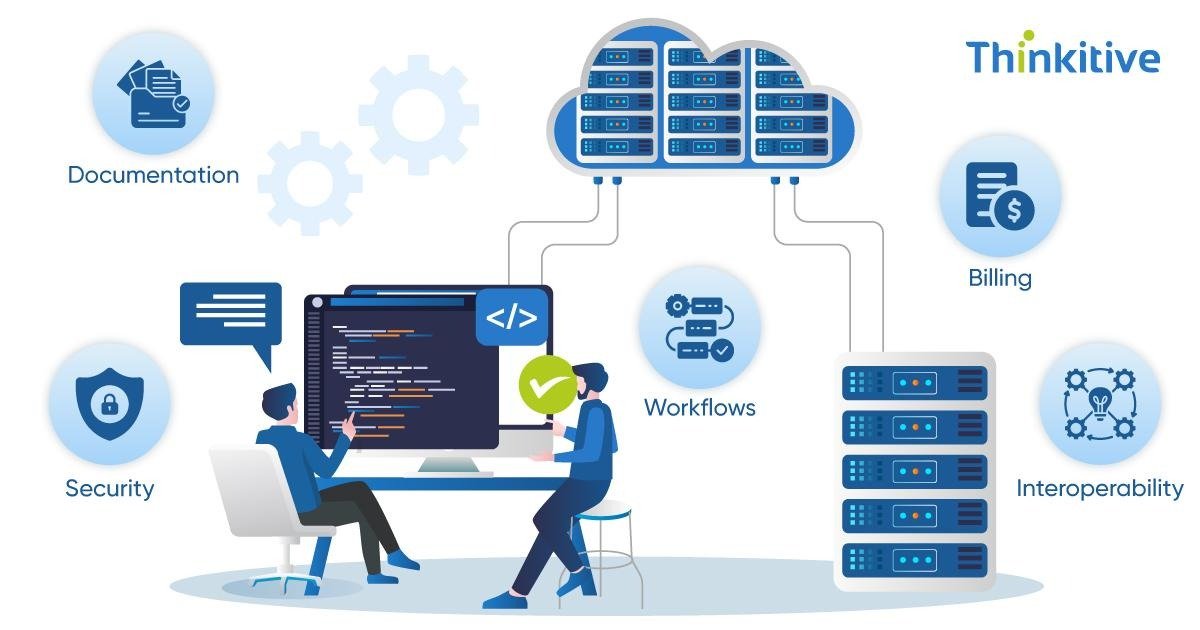
Now, to build a custom EHR software that mirrors how your clinic actually works, you need some key building blocks. While every practice works differently, there are five key elements that you need to keep in mind and are must-haves for developing the right custom EHR. Here are those five pillars you need to know before you dive into building your custom EHR solution:
- Custom Workflows & UI/UX Personalization: Every clinic works differently, and no two clinics manage patient intake, documentation, billing, and follow-ups the same way. So, you need to map your workflows and develop intuitive screens, dashboards, and navigation during the custom EHR development to reduce clicks and speed up the operations.
- Clinical Documentation Tools: Creating specialty-specific templates is essential as cardiology needs different documentation than behavioral health or orthopedics. Custom templates help your clinicians document quickly and more accurately while bringing clinical relevance right into the workflow.
- Integration & Interoperability: Connectivity is the core of today’s care models. The EHR systems need to seamlessly integrate with labs, billing systems, pharmacies, and imaging centers. So, don’t forget to embed FHIR, HL7, CCD, and other healthcare standards into your custom EHR. Most importantly, build secure APIs to keep data flowing smoothly and securely.
- Security & HIPAA Compliance: For healthcare clinics, compliance is a necessity to keep patient data safe and avoid hefty fines and penalties during audits. With a custom EHR development, you can easily build a HIPAA-compliant EHR. Moreover, with role-based access, audit trails, end-to-end encryption, and data governance frameworks, you can ensure the system is secure and meets regulations.
- Scalability & Performance: Cloud-native EHR architecture makes it easy to scale your system with the clinic’s growth. You can easily add new features, update the system to keep up with regulatory changes, and avoid the costs of a complete overhaul.
If you want a detailed breakdown of the full custom EHR software development lifecycle and technical considerations, visit our in-depth guide on Thinkitive.
Key Benefits of Custom EHR
A custom EHR gives clinics something that most off-the-shelf systems can’t offer— true alignment with how providers actually work. One of the biggest advantages is a significant reduction in administrative load. When workflows, templates, and shortcuts are designed around a clinician’s daily routine, documentation becomes faster, clicks are reduced, and burnout decreases.
These systems also improve patient experience with smoother workflows, quicker access to information, and fewer delays. All of this makes the entire patient journey more seamless and satisfying. In addition, tailored EHR systems effortlessly integrate with existing tools, whether it is billing, labs, or specialty devices. This eliminates the manual data entry and the need to find workarounds.
Most importantly, it’s a long-term solution. With EHR customization, you can eliminate recurring licence fees, expensive add-ons, and productivity losses caused by generic, rigid systems. And because it’s built specifically for the clinic, it supports all providers’ needs without compromising usability.
In short, custom EHR development gives clinics the freedom, efficiency, and control they have been missing.
Cost & Timeline: High-Level Estimates
Every custom EHR development project varies widely based on the clinic’s goals, required features, and integration needs. Meaning, the cost and required time for project completion are totally dependent on how much you customize the software with modules, customization complexity, and level of interoperability.
| Component | Typical Range (General Estimate) |
| Project Cost | Varies by features, integrations & compliance needs |
| Development Timeline | Generally depends on scope, specialty, and workflow depth |
A full breakdown of budget planning and project timelines is available in our detailed blog on custom EHR development.
When Should Providers Choose Custom EHR?
Well, a custom EHR is the right choice when a clinic’s workflows are too specialized or too dynamic for a one-size-fits-all system. Moreover, if your practice relies on niche workflows such as oncology treatment paths, orthopedic imaging flows, or behavioral health assessments, EHR customization ensures everything fits perfectly into your daily routine.
It’s also the right choice to choose a custom EHR for unique billing or RCM processes that don’t align with standard templates. In addition to this, multi-location clinics also benefit from a custom EHR system, especially when they have to standardize the processes across locations.
Finally, if your clinicians are constantly finding workarounds and entering data manually with generic EHRs, then it’s time to shift to a custom EHR.
To evaluate if a custom EHR is right for your practice, review the comprehensive guide on Thinkitive’s site.
Conclusion
Long story short, with today’s care models demanding a flexible and connected ecosystem, which off-the-shelf EHRs can’t provide. This is where a custom EHR becomes a necessary investment rather than an optional tech upgrade.
With workflows built around your specialty and systems that grow with your practice, you no longer have to work with rigid, generic software. So, if you are using a generic EHR that makes you work harder rather than being efficient, then it’s time to transition to a custom EHR software.
If you are ready to explore what a tailored solution can deliver, click here to connect with our team and start building the EHR your clinic truly deserves.
Frequently Asked Questions
What defines a custom EHR system compared to a standard, off-the-shelf product?
A custom EHR is built specifically around your clinic’s workflows, specialty needs, and integrations. Unlike off-the-shelf systems with generic templates, a custom EHR adapts to how you deliver care, offering tailored documentation, flexible modules, smoother interoperability, and better long-term control over your clinical and administrative processes.
Is building a custom EHR HIPAA-compliant?
Yes—custom EHR development can fully meet HIPAA requirements when designed with strict security controls from the start. This includes encrypted data storage, audit logs, access controls, secure hosting, and adherence to ONC and CMS certification standards to ensure patient data remains protected throughout development and usage.
How much more expensive is a custom EHR than buying an existing one?
Custom EHRs typically require a higher initial investment, but long-term costs often decrease because practices avoid recurring license fees, unnecessary add-ons, and productivity losses caused by rigid systems. Pricing varies widely based on workflow complexity, integrations, and specialty needs, making cost-benefit alignment a key evaluation factor.
How long does custom EHR development take?
Timelines vary significantly depending on the scope. A smaller specialty practice may see a custom MVP in a few months, while complex, multi-location systems can take longer due to integrations and phased rollouts. The duration depends on workflows, compliance needs, features, and interoperability requirements.
How can a custom EHR improve my specific practice’s workflow?
A custom EHR for specialty practice maps directly to your clinic’s daily processes—documentation, billing, care plans, communication, and specialty workflows—so staff spend less time clicking through irrelevant screens. By aligning the system with your exact clinical patterns, it reduces friction, improves accuracy, eliminates workarounds, and boosts overall efficiency and patient experience.