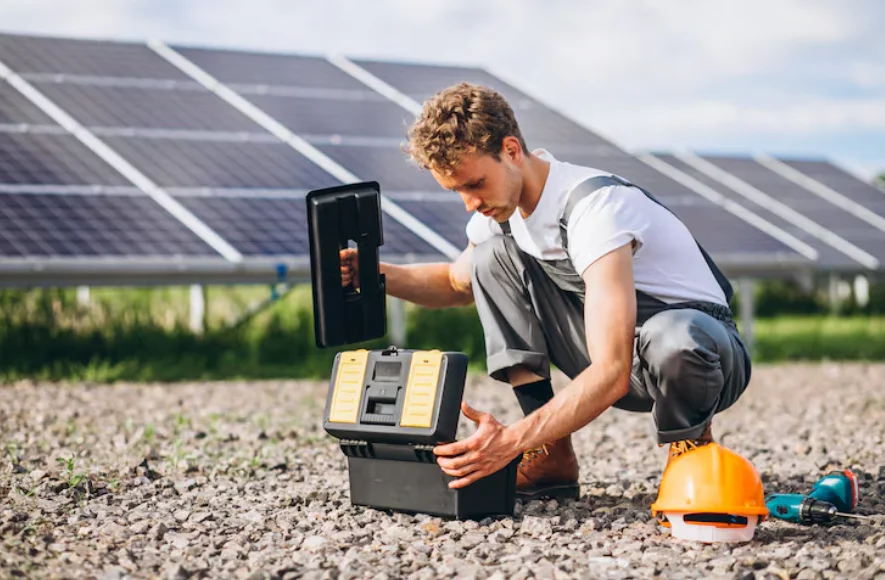
A solar farm may look serene once the panels are glinting in neat rows, but behind that calm façade lies a hectic ballet of cranes, flatbeds, and specialized crews. Before the first rack is anchored, project managers must decide exactly where every truck will unload, how components will flow across the site, and when each piece of machinery will roll into position.
Get the staging right, and construction feels effortless; get it wrong and schedules unravel, costs soar, and reputations suffer.
Logistics: The Invisible Foundation of Solar Success
Proper equipment staging starts with mapping every square foot of the property long before ground is broken. Survey data, soil studies, and weather patterns feed into a live logistics plan that assigns zones for storage, pre-assembly, and active installation. When articulated lifts, pile drivers, and tracker panels arrive at clearly marked areas, crews waste no time hunting for parts or maneuvering around clutter.
This seamless flow slashes idle hours, trims rental fees, and keeps milestones intact. In contrast, ad hoc drop-offs create choke points: forklifts vie for space, pallet stacks block access roads, and workers lose minutes—then hours—zigzagging across the site. Over hundreds of acres, those delays compound into weeks.
Sequencing Deliveries to Match Construction Rhythms
A solar farm rises in layers: civil grading, foundation driving, racking, module mounting, wiring, and commissioning. Each phase relies on just-in-time deliveries that mirror that rhythm. Staging yards must therefore hold precisely what tomorrow’s crews need—not last week’s leftovers. Smart planners set up satellite lay-down areas near work fronts and replenish them nightly so installers start every morning fully stocked.
By contrast, flooding the site with every part at once may feel proactive, but it ties up capital in unused inventory and forces workers to tiptoe around mountains of crates. Effective sequencing keeps cash flowing, reduces theft risk, and prevents weather damage to materials waiting in the open.
Protecting Sensitive Components from Site Realities
Solar modules, inverters, and combiner boxes might look rugged, yet they are vulnerable to moisture, dust, and vibration. Well-designed staging areas elevate pallets on timbers, wrap cartons in breathable covers, and orient glass faces away from prevailing winds. Even the placement of transformers considers ventilation and shade to avoid heat stress before energization.
These precautions prove vital when storms sweep in or desert winds whip grit across the array. Projects that skimp on protection often discover an unsettling tally of micro-cracks, scratched backsheets, or moisture-logged electronics during commissioning—costly defects that slash energy output and trigger warranty disputes.
Creating Safe, Efficient Pathways for Heavy Moves
The heaviest lifts usually happen late in the build, when rows of mounted panels leave only narrow corridors for cranes and lowboys. A clear staging strategy carves designated haul routes wide enough for swing radii, posts speed-limit signage, and positions flaggers at blind curves.
On many utility-scale builds, crews lay composite mats to create temporary roads that stop tracked carriers from churning the soil into a muddy quagmire. Safe pathways not only protect ground conditions and nearby equipment but also cut travel times, allowing high-cost cranes to execute more picks per hour.
Conclusion
Solar development is a race against budget burn and changing weather. Thoughtful equipment staging turns that race into a well-paced marathon, where every delivery lands exactly where and when it is needed, components remain pristine, and heavy machines glide through the site without drama.
The payoff is tangible: faster mechanical completion, fewer reworks, and a smoother handover to operations teams eager to harvest electrons. In the end, staging is not a side note—it is the critical hinge on which a solar farm’s success swings.