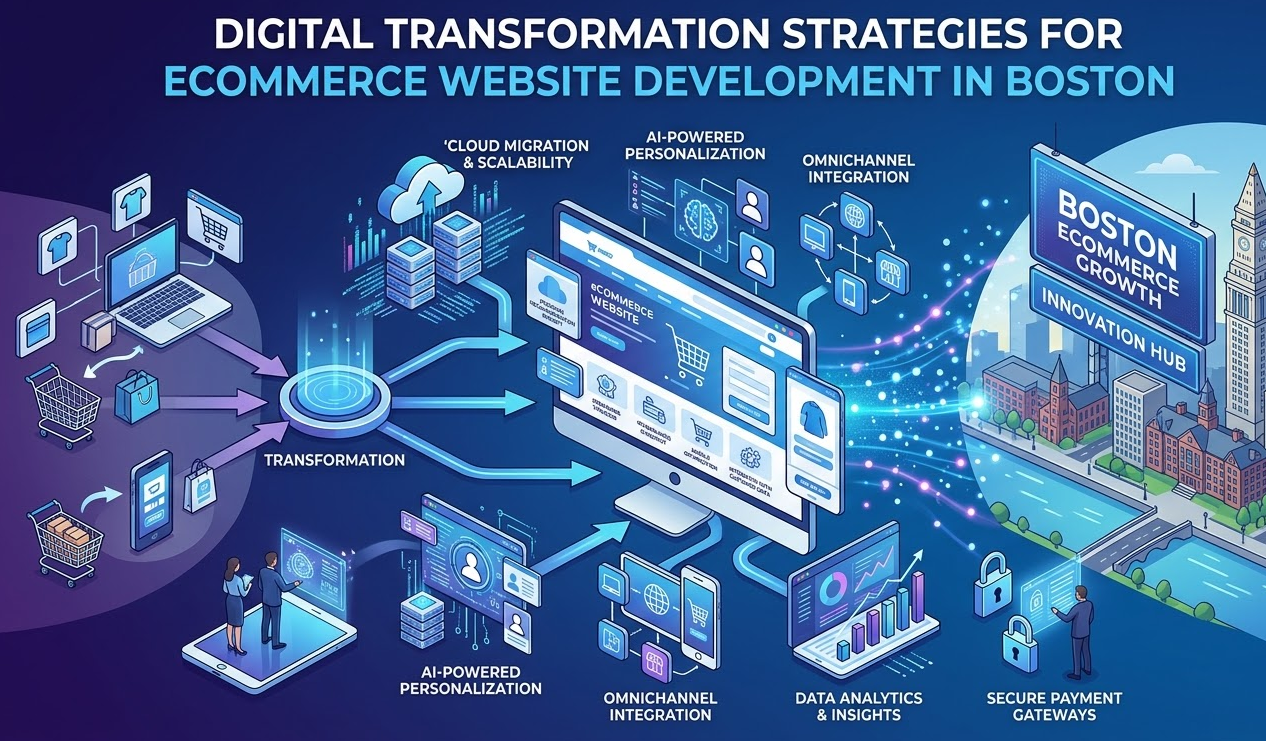
Boston has emerged as one of the leading technology and innovation hubs in the United States. The city hosts a thriving ecosystem of startups, retail brands, logistics companies, and technology providers that are actively embracing digital-first business models. As consumer behavior shifts toward online purchasing, retailers across Boston are investing in modern eCommerce platforms to stay competitive in an increasingly digital marketplace.
However, building a basic online store is no longer sufficient. Businesses must adopt comprehensive digital transformation strategies that integrate advanced technologies, seamless customer experiences, and data-driven operations. Effective ecommerce application development and scalable eCommerce Website Development frameworks allow companies to deliver personalized shopping experiences while maintaining operational efficiency.
Digital transformation in retail is therefore not simply about launching a website. It involves redesigning technology infrastructure, improving customer engagement models, and integrating data intelligence across the entire commerce ecosystem.
The Growing Importance of Digital Commerce in Boston
Boston’s retail sector is evolving rapidly due to changing consumer expectations and strong technological adoption across industries. Local businesses are increasingly adopting advanced ecommerce application development strategies to support online sales, mobile commerce, and omnichannel retail experiences.
Modern eCommerce platforms enable businesses to serve customers beyond physical store locations while improving operational agility.
Rise of Mobile-First Shopping Experiences
Consumers in metropolitan areas such as Boston increasingly prefer mobile-based purchasing. Retailers must develop responsive platforms and mobile-optimized interfaces that ensure seamless browsing, product discovery, and checkout experiences.
Advanced ecommerce application development helps businesses deliver high-performance mobile storefronts that support growing mobile traffic.
Expansion of Omnichannel Retail Models
Customers expect consistent shopping experiences across physical stores, websites, and digital marketplaces. Retailers that integrate inventory, promotions, and customer data across channels can provide seamless transitions between online and offline shopping journeys.
Omnichannel infrastructure plays a central role in digital transformation in retail initiatives.
Demand for Personalized Customer Experiences
Modern consumers expect tailored recommendations, personalized discounts, and curated product suggestions based on browsing behavior. Data-driven personalization improves engagement and increases conversion rates.
Intelligent analytics integrated within ecommerce web development frameworks enables businesses to deliver targeted shopping experiences.
Increasing Competition From Digital-First Retailers
Boston’s retail environment includes both traditional stores transitioning online and emerging digital-native brands. Businesses must adopt innovative digital strategies to differentiate themselves and retain market share.
Custom platforms help companies create unique customer journeys that stand out in competitive digital markets.
Key Digital Transformation Strategies for eCommerce Platforms
Successful digital commerce transformation requires strategic planning that integrates technology, operations, and customer engagement models. Businesses must design platforms that support both present operational requirements and future scalability.
Effective strategies combine infrastructure modernization with advanced ecommerce application development.
Cloud-Based Commerce Infrastructure
Cloud technology enables flexible infrastructure that scales according to traffic demands and seasonal sales spikes. Retailers can deploy distributed systems that maintain high performance during peak events such as holiday promotions.
Cloud-based platforms also improve operational resilience and reduce infrastructure maintenance costs.
Data-Driven Decision Making
Retailers must analyze customer behavior, product performance, and marketing effectiveness using real-time analytics tools. Data intelligence enables businesses to refine pricing strategies, optimize product assortments, and improve marketing campaigns.
Integrated analytics platforms strengthen digital transformation in retail strategies.
AI-Powered Product Recommendations
Artificial intelligence tools analyze browsing patterns and purchase histories to deliver personalized product recommendations. This approach increases customer engagement and encourages cross-selling opportunities.
AI-powered personalization has become a core component of modern ecommerce application development.
Automation of Retail Operations
Automation technologies streamline order processing, inventory management, and customer communication workflows. Automated systems reduce manual workload while improving operational accuracy.
Retail automation supports scalable growth for expanding digital businesses.
Modern Technology Stack for eCommerce Website Development
Choosing the right technology stack is critical for building scalable and high-performance digital commerce platforms. Modern architectures prioritize flexibility, speed, and integration capabilities.
Retailers in Boston increasingly adopt modular architectures that support continuous innovation.
Headless Commerce Architecture
Headless commerce separates the frontend presentation layer from backend commerce systems. This architecture allows developers to create highly customized user interfaces while maintaining robust backend functionality.
Headless frameworks support faster updates and improved performance across multiple devices.
API-Driven System Integration
APIs allow seamless integration between eCommerce platforms and external systems such as payment gateways, inventory management tools, and marketing platforms.
API-driven architecture enhances interoperability within complex retail ecosystems.
Progressive Web Applications
Progressive Web Applications combine the functionality of mobile apps with the accessibility of websites. They provide fast loading times, offline capabilities, and app-like user experiences.
PWAs significantly enhance mobile commerce performance.
Secure Payment Infrastructure
Modern commerce platforms must integrate secure payment gateways that support multiple payment options, including digital wallets and international currencies.
Strong security frameworks build customer trust and protect transaction data.
Customer Experience Optimization for Digital Commerce
Customer experience remains the most important driver of online retail success. Digital transformation initiatives must prioritize intuitive design, fast performance, and personalized engagement.
Optimized user journeys encourage repeat purchases and improve brand loyalty.
Streamlined Product Discovery
Advanced search functionality, filtering options, and product categorization help customers quickly find desired products. Efficient discovery mechanisms improve conversion rates.
Intelligent search engines enhance usability within eCommerce Website Development environments.
Simplified Checkout Processes
Complicated checkout processes often result in cart abandonment. Retailers must design simplified payment flows that reduce friction and support guest checkout options.
Optimized checkout architecture significantly improves sales completion rates.
Customer Support Integration
Modern platforms integrate live chat, chatbots, and automated support tools that assist customers during the purchasing journey.
Responsive support systems improve overall shopping satisfaction.
Loyalty and Reward Programs
Digital loyalty programs encourage repeat purchases by offering incentives such as discounts, points, or exclusive offers.
Integrated reward systems strengthen long-term customer relationships.
Security and Compliance Considerations
Security remains a critical aspect of digital commerce infrastructure. Retail platforms must protect customer data, payment information, and internal systems from cyber threats.
Strong security frameworks are fundamental to sustainable digital transformation in retail.
Secure Authentication Systems
Multi-factor authentication and secure login protocols protect customer accounts from unauthorized access.
Enhanced authentication reduces the risk of account takeover attacks.
Payment Data Protection
Encryption technologies protect sensitive financial information during transactions. Compliance with industry standards ensures secure payment processing.
Secure payment systems strengthen consumer confidence.
Fraud Detection Mechanisms
AI-powered fraud detection tools identify suspicious transactions and prevent fraudulent activities.
Real-time monitoring protects both businesses and customers.
Data Privacy Compliance
Retailers must comply with privacy regulations governing customer data collection and usage.
Transparent privacy practices enhance brand credibility.
Choosing the Right Development Partner in Boston
Successful digital commerce transformation often requires collaboration with experienced technology partners who understand both technical architecture and retail business models.
Working with a leading eCommerce development company in Boston enables businesses to access specialized technical expertise, scalable platform design capabilities, and industry-specific insights needed to build high-performing digital commerce ecosystems.
A specialized development team can guide businesses through strategic platform planning, design, and implementation while ensuring the platform aligns with long-term digital growth objectives.
Industry-Specific Expertise
Development partners with experience in retail and commerce platforms can anticipate industry challenges and deliver tailored solutions.
Sector knowledge improves project outcomes.
Scalable Development Methodologies
Agile development frameworks enable iterative improvements and continuous feature deployment.
Flexible development cycles support evolving business requirements.
Long-Term Technology Support
Post-launch maintenance and upgrades are essential for platform stability and innovation.
Reliable support ensures long-term operational success.
Strategic Digital Consultation
Experienced partners help businesses align technology decisions with broader digital transformation goals.
Strategic guidance improves return on technology investment.
Conclusion
Boston’s rapidly evolving retail landscape requires businesses to adopt forward-looking digital strategies that go beyond basic online storefronts. Modern eCommerce platforms must support personalization, omnichannel integration, advanced analytics, and scalable infrastructure to meet growing customer expectations.
Through strategic ecommerce application development and robust eCommerce Website Development frameworks, retailers can create powerful digital ecosystems that enhance customer experiences and operational efficiency.
When combined with strong data intelligence and security practices, these platforms become central drivers of digital transformation in retail.
Organizations that embrace these digital transformation strategies position themselves to compete effectively in Boston’s dynamic commerce environment while building sustainable growth in the digital economy.