
Back pain has become one of the most common physical complaints in modern life, especially for people who sit for long hours, work on screens, or maintain poor posture throughout the day. Many individuals struggle to find lasting relief often relying on temporary solutions that don’t address the root cause.
This is where best yoga poses for back pain become a practical and natural alternative. After reviewing how people in 2026 are managing chronic discomfort and mobility issues it’s clear that yoga has become a widely trusted method for improving spinal health.
It works not only on flexibility but also on muscle balance and stress regulation which directly impacts pain levels. In this guide you will learn the most effective yoga poses for beginners and advanced users how they help different types of back pain, what mistakes to avoid, and how to build a safe daily routine that supports long term relief.
Why Yoga Helps Relieve Back Pain?
Yoga helps relieve back pain by improving spinal alignment, strengthening core muscles, and reducing tension caused by stress or inactivity.
Unlike quick fixes, yoga works gradually by restoring balance in the musculoskeletal system. It also improves blood flow to the spine which supports healing and reduces stiffness over time.
Muscle Activation and Spine Support
Yoga activates deep stabilizing muscles around the spine, especially the core, glutes, and lower back. These muscles are essential for maintaining posture and reducing pressure on spinal discs. When these areas become weak due to sitting or inactivity pain often increases.
Regular practice helps retrain the body to support itself naturally. Movements like gentle backbends and controlled stretches encourage proper spinal alignment which reduces long term strain.
Stress Reduction and Pain Connection
Stress plays a major role in back pain because it causes muscle tightness, especially in the neck and lower back. The parasympathetic nervous system, which aids in relaxation and tension release, is activated by yoga.
Breathing techniques combined with movement also reduce cortisol levels which are linked to chronic pain sensitivity. This is why many users report feeling immediate relief after even short yoga sessions.
Research Based Benefits of Yoga
Clinical observations show that consistent yoga practice can improve mobility and reduce lower back pain intensity over time. While it is not a cure for structural spinal conditions it is widely recommended as a supportive therapy.
Studies also suggest that yoga may reduce the need for pain medication in some individuals by iproving functional movement and posture control.
The Greatest Yoga Poses for Beginners with Back Pain
Beginner yoga poses focus on gentle movement, safe stretching, and spinal decompression. These poses are ideal for people with stiffness, long sitting hours, or mild to moderate back discomfort. When practiced correctly they improve mobility without stressing the spine or surrounding muscles.
1. Cat Cow Pose for Spine Mobility
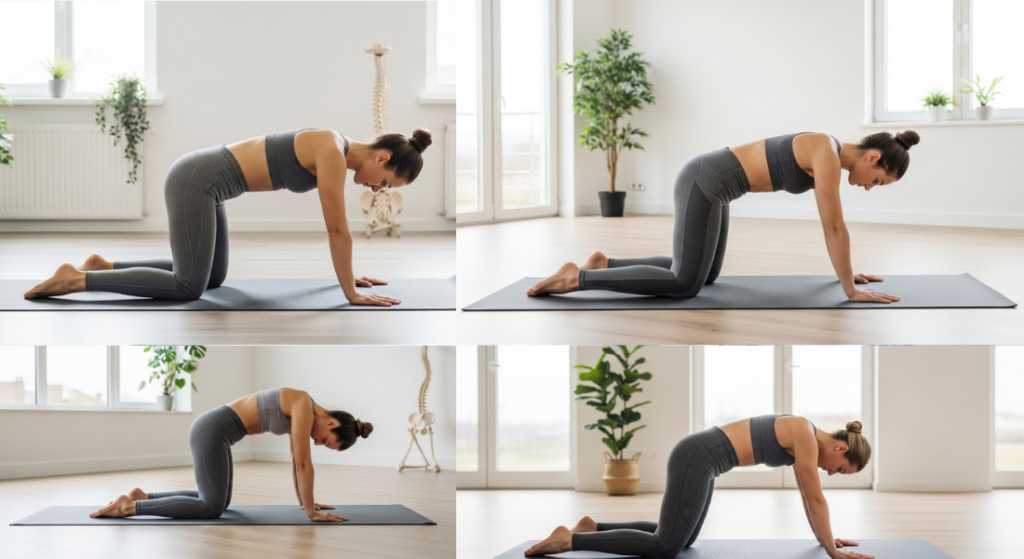
Cat Cow is one of the most effective movements for improving spinal flexibility. It involves slow arching and rounding of the back which increases mobility in each vertebra. This movement also improves coordination between breath and motion helping release stiffness in the lower back and neck. It is often used as a warm up for almost all yoga routines.
Muscles worked
- Spinal extensors
- Core muscles
- Neck stabilizers
To do this:
- Place your knees behind your hips and your wrists beneath your shoulders and go on all fours.
- Keep your back neutral and distribute weight evenly.
- Inhale slowly and drop your belly toward the floor.
- Lift your chest and look a little up, like you’re in the cow position.
- Exhale and gently round your spine upward toward the ceiling.
- Tuck your chin toward your chest gently.
- Engage your core while rounding the back.
- Move slowly between both positions without rushing.
- Repeat for 1–2 minutes with controlled breathing.
2. Child’s Pose for Deep Relaxation
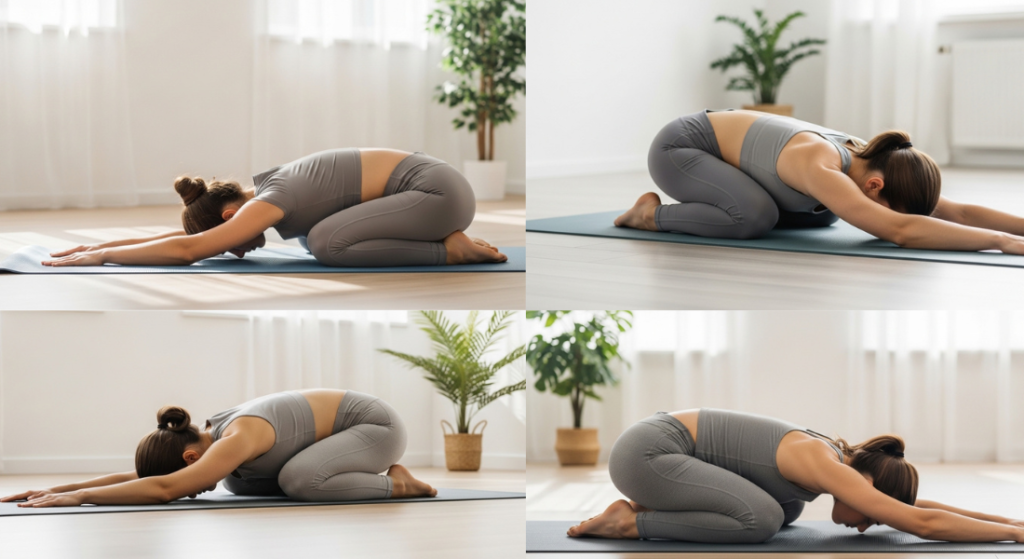
Child’s Pose gently stretches the lower back, hips, and thighs while allowing the spine to fully relax. It is especially useful during flare ups of back pain. This position reduces pressure on spinal discs and helps calm the nervous system. Many practitioners use it as a recovery posture between more active movements.
Muscles worked
- Lower back muscles
- Glutes (gluteus maximus)
- Hip flexors and thighs
To do this:
- Sit with your knees slightly apart and your bottom on the floor.
- Slowly bend forward from your hips.
- Extend your arms forward on the mat.
- Allow your forehead to lightly touch the ground.
- Keep breathing slow and steady.
- Relax your shoulders completely.
- Allow your back to soften with each exhale.
- Hold the position without forcing any stretch.
- Stay for 1–3 minutes for full relaxation.
3. Sphinx Pose for Gentle Back Strength
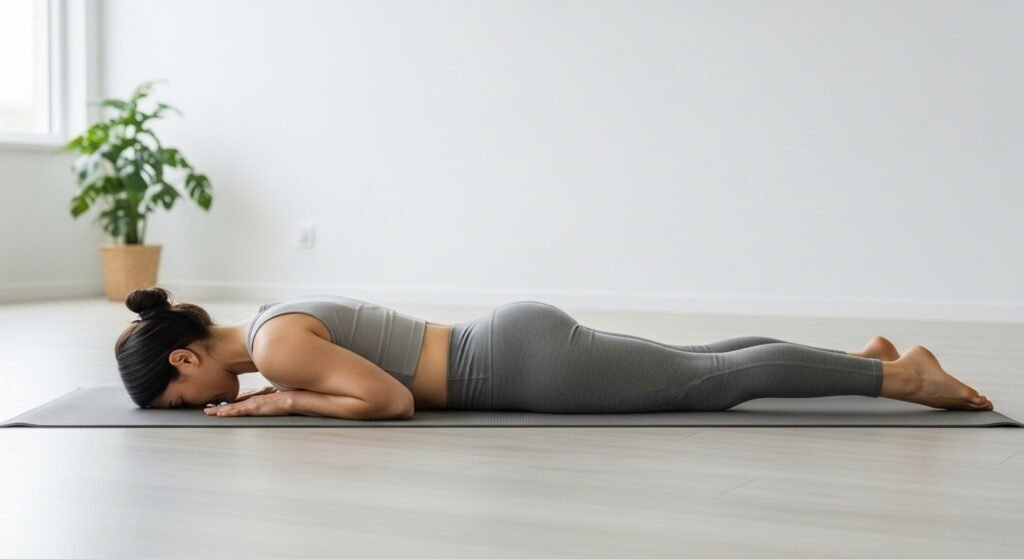
Sphinx Pose strengthens the lower back without heavy compression. It gently lifts the chest while keeping the pelvis grounded making it ideal for beginners. It also helps activate the spinal extensors which support posture and reduce slouching caused by long sitting hours.
Muscles worked
- Erector spinae
- Gluteal muscles
- Upper back stabilizers
To do this:
- Lie flat on your stomach.
- Place elbows under your shoulders.
- Keep forearms flat on the ground.
- Press palms gently into the floor.
- Inhale and lift your chest slightly.
- Keep hips and legs grounded.
- Engage lower back muscles lightly.
- Avoid collapsing into the lower spine.
- Hold for 30–60 seconds.
4. Bridge Pose for Core Stability
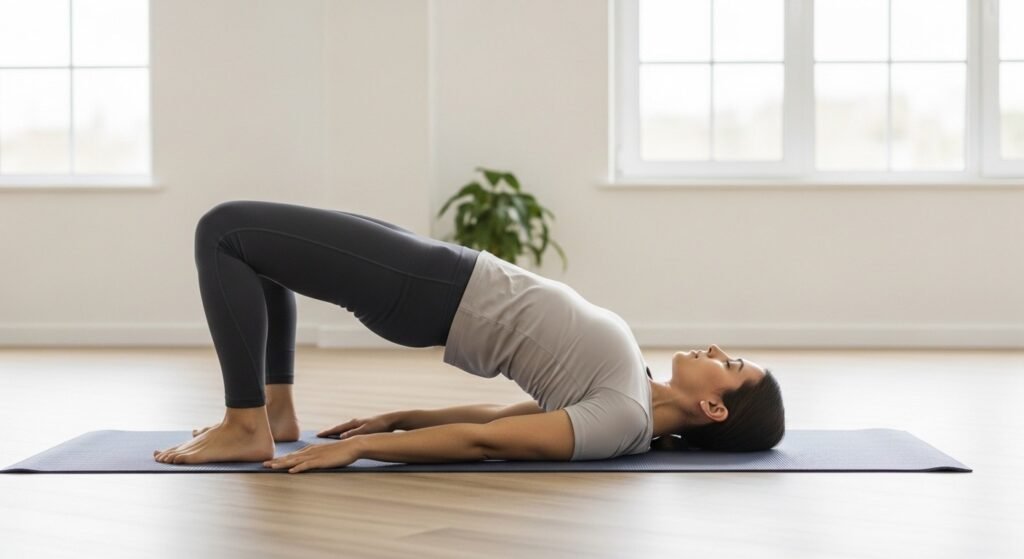
Bridge Pose strengthens the glutes, lower back, and core muscles. It also improves hip mobility which is closely linked to lower back health. This pose helps counteract the effects of prolonged sitting by opening the front body and activating posterior muscles.
Muscles worked
- Glutes
- Hamstrings
- Lower back stabilizers
- Core muscles
To do this:
- Lie on your back with knees bent.
- Keep your feet flat on the floor and stand with your hips about as wide as your shoulders.
- Place arms beside your body.
- Inhale and press feet into the floor.
- Slowly lift your hips upward.
- Engage your glutes and core muscles.
- Keep shoulders grounded.
- Hold the position steadily.
- Lower down slowly with control.
Advanced Yoga Poses for Chronic Back Pain
Advanced poses require better control, flexibility, and spinal awareness. These movements target deeper muscle groups and are useful for long term chronic back pain management when performed correctly.
1. Cobra Pose for Spine Extension
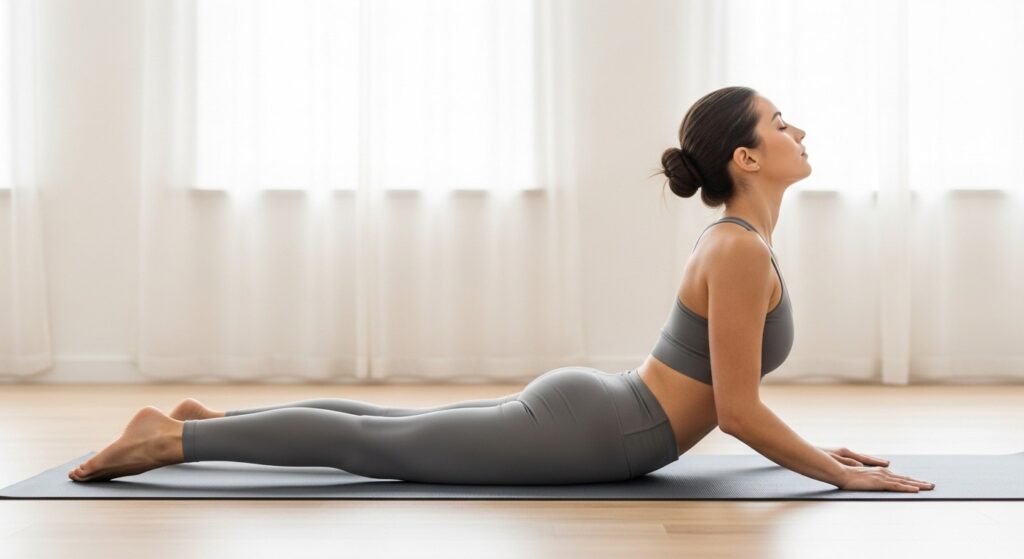
Cobra Pose strengthens the spine while stretching the chest and abdomen. It helps reverse spinal compression caused by sitting. It also improves posture by training the back muscles to support the upper body more effectively.
Muscles worked
- Lower back extensors
- Chest muscles
- Shoulder stabilizers
To do this:
- Lie on your stomach with palms under shoulders.
- Keep elbows close to your body.
- Inhale and slowly lift your chest upward.
- Keep lower ribs lightly grounded.
- Do not overextend your lower back.
- Engage back muscles for support.
- Keep neck neutral or slightly lifted.
- Breathe steadily while holding.
- Hold for 20–40 seconds.
2. Triangle Pose for Hip and Back Stretch
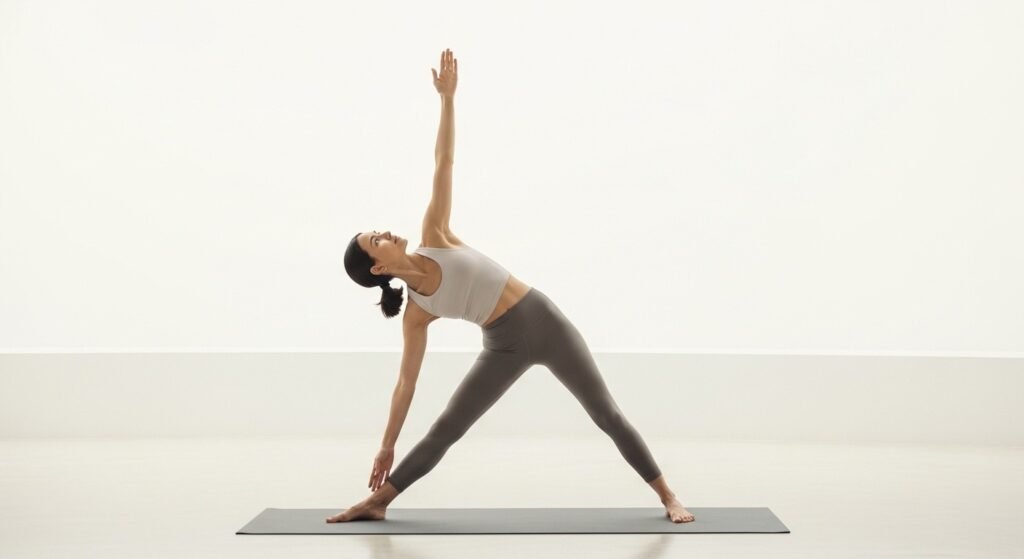
Triangle Pose stretches the hamstrings, hips, and spine simultaneously. It improves balance and relieves stiffness across the entire back line. This pose is especially helpful for improving spinal rotation and reducing tightness in the lower back.
Muscles worked
- Hamstrings
- Obliques (side core muscles)
- Lower back stabilizers
- Hip muscles
To do this:
- Stand with legs wide apart.
- Turn one foot outward.
- Extend arms sideways.
- Hinge at your hip slowly.
- Reach hand toward shin or floor.
- Lift opposite arm upward.
- Keep chest open.
- Do not collapse forward.
- Hold for 30–60 seconds.
3. Downward Dog for Full Body Relief
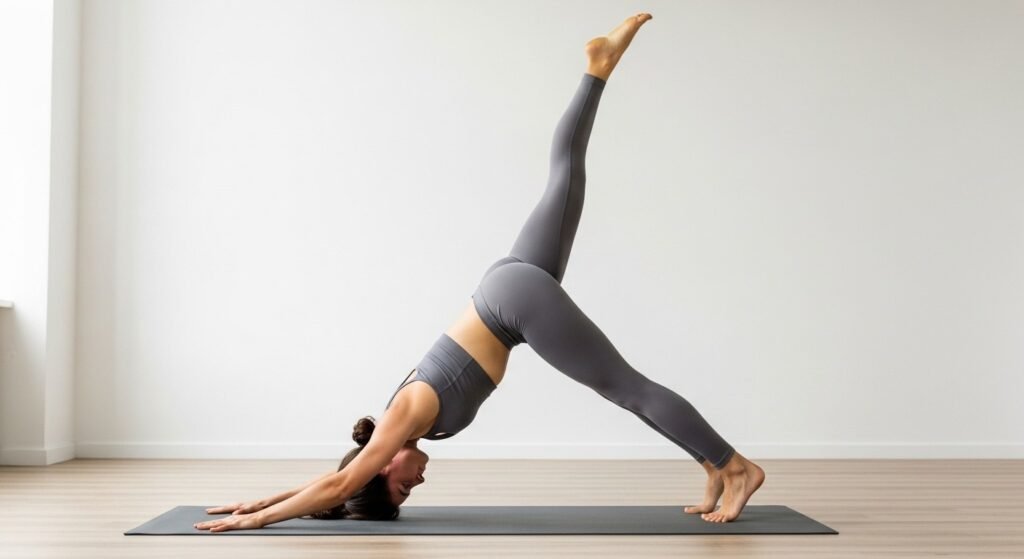
Downward Dog lengthens the spine and strengthens the arms, legs, and core. It improves circulation and relieves pressure from the lower back. It is considered a foundational yoga pose because of its full body benefits.
Muscles worked
- Hamstrings
- Shoulders
- Core
- Spinal muscles
To do this:
- Start on hands and knees.
- Lift hips upward into inverted V shape.
- Straighten legs as comfortable.
- Press palms firmly into ground.
- Keep spine long and extended.
- Relax head between arms.
- Engage core lightly.
- Hold steady breathing.
- Maintain for 30–60 seconds.
4. Supine Spinal Twist for Recovery
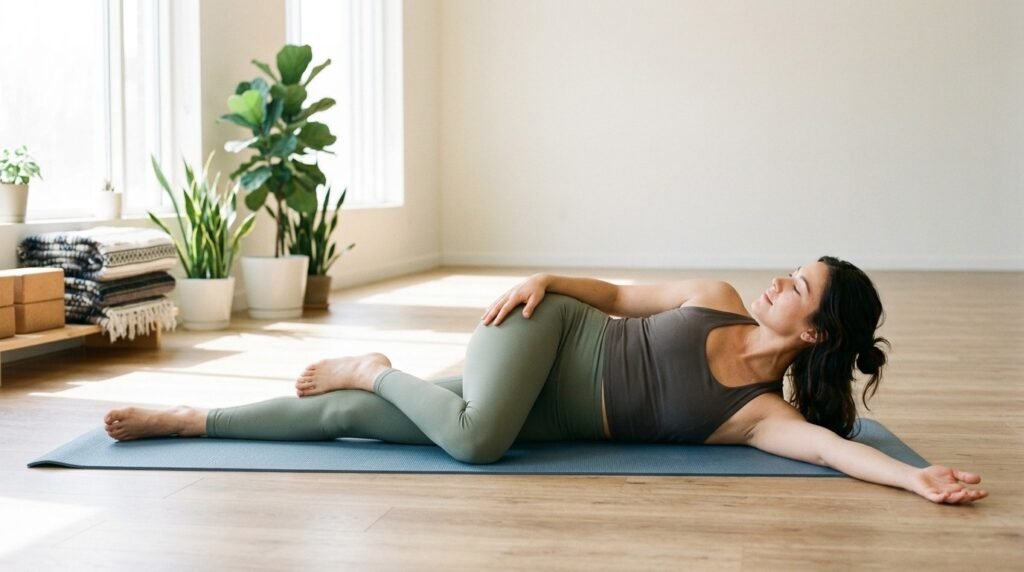
This gentle twist helps release tension in the spine and improves mobility in the lower back. It also supports digestion and relaxation. It is commonly used as a cooling down pose after more active sequences.
Muscles worked
- Spinal rotators
- Lower back muscles
- Obliques
- Glutes
To do this:
- Lie on your back.
- Bring knees toward chest.
- Drop knees to one side.
- Keep shoulders flat on floor.
- Extend opposite arm outward.
- Turn head opposite direction if comfortable.
- Relax into the twist.
- Breathe deeply.
- Hold for 30–60 seconds each side.
Yoga Poses for Specific Conditions
Different back conditions require different approaches because pain in the spine can come from nerve compression, muscle imbalance, or inflammation. Yoga can be highly effective when it is adjusted according to the severity and type of condition.The key is to focus on gentle movement, controlled breathing, and avoiding overstressing sensitive areas of the spine.
After analyzing how individuals manage back pain in real world scenarios, especially in 2026 wellness routines, it becomes clear that condition specific yoga provides better long term relief than generic routines. When poses are matched to the right condition the risk of injury decreases and recovery improves.
This section explains how yoga can be safely adapted for common back issues like sciatica, herniated discs, arthritis, and posture related pain. Each condition requires a slightly different movement strategy to ensure both safety and effectiveness.
Yoga for Sciatica Pain
Sciatica pain is caused by irritation or compression of the sciatic nerve which often leads to sharp pain traveling from the lower back down the leg. In such cases gentle stretching is more effective than deep or forceful movements.
Yoga should focus on releasing pressure rather than increasing flexibility too quickly. Poses like Child’s Pose and Supine Spinal Twist are commonly recommended because they help decompress the lower spine. These movements reduce nerve tension and improve blood flow in the affected area.
However the intensity must always remain low to avoid aggravating symptoms. Consistency is more important than intensity in sciatica management. Practicing short controlled sessions daily can gradually reduce stiffness and improve mobility without triggering pain flare-ups.
Yoga for Herniated Disc Support
A herniated disc occurs when spinal cushioning is displaced creating pressure on surrounding nerves. In this condition excessive bending or twisting can worsen symptoms so yoga must focus on gentle spinal extension and stability rather than deep flexion.
Mild backbends such as Sphinx Pose are generally safer because they encourage spinal alignment without heavy compression. These poses help maintain mobility while protecting the affected disc from additional strain.
It is also important to avoid aggressive forward folds or fast transitions between poses. Slow controlled movements combined with proper breathing allow the spine to decompress safely and reduce irritation over time.
Yoga for Arthritis Stiffness
Arthritis in the spine often causes stiffness, reduced mobility, and discomfort during movement. The goal of yoga in this condition is not to push flexibility but to gently improve joint lubrication and circulation.Slow mobility exercises help reduce stiffness by encouraging synovial fluid movement within the joints.
This improves range of motion and reduces morning or long term stiffness in the back. Gentle repetitive movements performed in a relaxed rhythm are more beneficial than static or intense stretches. Over time this helps maintain spinal function and reduces discomfort in daily activities.
Yoga for Office Related Back Pain
Office related back pain is usually caused by long hours of sitting, poor posture, and weak core engagement. This type of pain is more muscular and postural rather than structural making it highly responsive to yoga.
Short daily routines focusing on spinal alignment and posture correction are most effective. Movements that open the chest, activate the core, and release lower back tension help reverse sitting related strain.
Even small breaks during work hours can significantly reduce discomfort. A few minutes of stretching throughout the day can improve circulation and prevent stiffness from building up.
Step by Step Daily Yoga Routine for Back Pain Relief
A simple routine can create consistent improvement.
Morning Routine
Gentle stretches like Cat-Cow and Child’s Pose help wake up the spine and reduce stiffness.
Midday Desk Routine
Short seated stretches help reset posture and reduce pressure buildup.
Evening Recovery Flow
Restorative poses like Supine Twist and Bridge Pose help relax muscles before sleep.
Common Mistakes That Make Back Pain Worse
Many people overstretch or rush through poses which increases strain instead of reducing it. Poor posture alignment is another major issue that limits results. Ignoring pain signals can also lead to injury. Yoga should always feel controlled, not forced.
Pricing and Cost of Yoga for Back Pain Relief
Yoga can be practiced for free at home using online resources. Paid apps and studio classes range from low to moderate cost depending on location and expertise. Compared to physical therapy yoga is significantly more affordable long term making it a high ROI wellness practice for consistent users.
Yoga vs Physical Therapy vs Stretching
Yoga provides a balance between flexibility, strength, and stress reduction. Physical therapy is more clinical and targeted while stretching focuses only on flexibility. Yoga is best for long term maintenance, PT is best for injury recovery, and stretching is best for short term relief.
Benefits and Drawbacks of Yoga for Back Pain
Yoga improves mobility, posture, and stress levels making it highly effective for chronic discomfort. However it requires consistency and proper technique to avoid strain. It is not a quick fix for structural spinal injuries but works well as a long term supportive practice.
Who Should NOT Use Yoga for Back Pain?

People with acute injuries, severe nerve compression, or post surgery recovery without medical approval should avoid unsupervised yoga. Sharp or radiating pain is a signal to stop and consult a healthcare professional before continuing.
Expected Results from Yoga Practice
Most users report improved flexibility within a few weeks and noticeable pain reduction within 2–6 weeks of consistent practice. Long erm benefits include better posture, reduced stiffness, and stronger core stability.
Final Verdict on Yoga for Back Pain
| Category | Score |
| Pain Relief | 9/10 |
| Safety | 8/10 |
| Accessibility | 10/10 |
| Long-Term Benefits | 9/10 |
| Beginner Friendliness | 9/10 |
Overall Rating: 9/10
Yoga is one of the most practical and sustainable methods for managing back pain when practiced correctly and consistently.
Conclusion
Yoga offers a practical and natural way to manage back pain by improving flexibility, strengthening core muscles, and reducing tension in the spine. When practiced consistently it helps restore mobility and supports long term spinal health without relying on quick fixes or medication based solutions.
This approach is especially useful for people dealing with sciatica, posture related pain, or stiffness caused by long sitting hours. Office workers, beginners with limited flexibility, and individuals looking for gentle rehabilitation can benefit the most from these routines when practiced correctly and safely.
If you are dealing with ongoing back discomfort starting with simple poses like Cat Cow and Child’s Pose can make a noticeable difference over time. The key is consistency, slow progress, and listening to your body rather than forcing movement.
FAQ
Can yoga really help back pain?
Yes yoga improves flexibility, posture, and muscle strength, reducing pain over time.
For back discomfort, which yoga posture works best?
Child’s Pose and Cat-Cow are most effective for beginners.
Is yoga safe for sciatica?
Yes but only with gentle modifications and proper guidance.
How frequently should I do yoga to treat back pain?
For best results, do this three to five times a week.
Can yoga make back pain worse?
Yes if done with poor form or without warm up.
Is yoga better than physical therapy?
PT is clinical, yoga is better for long-term maintenance.