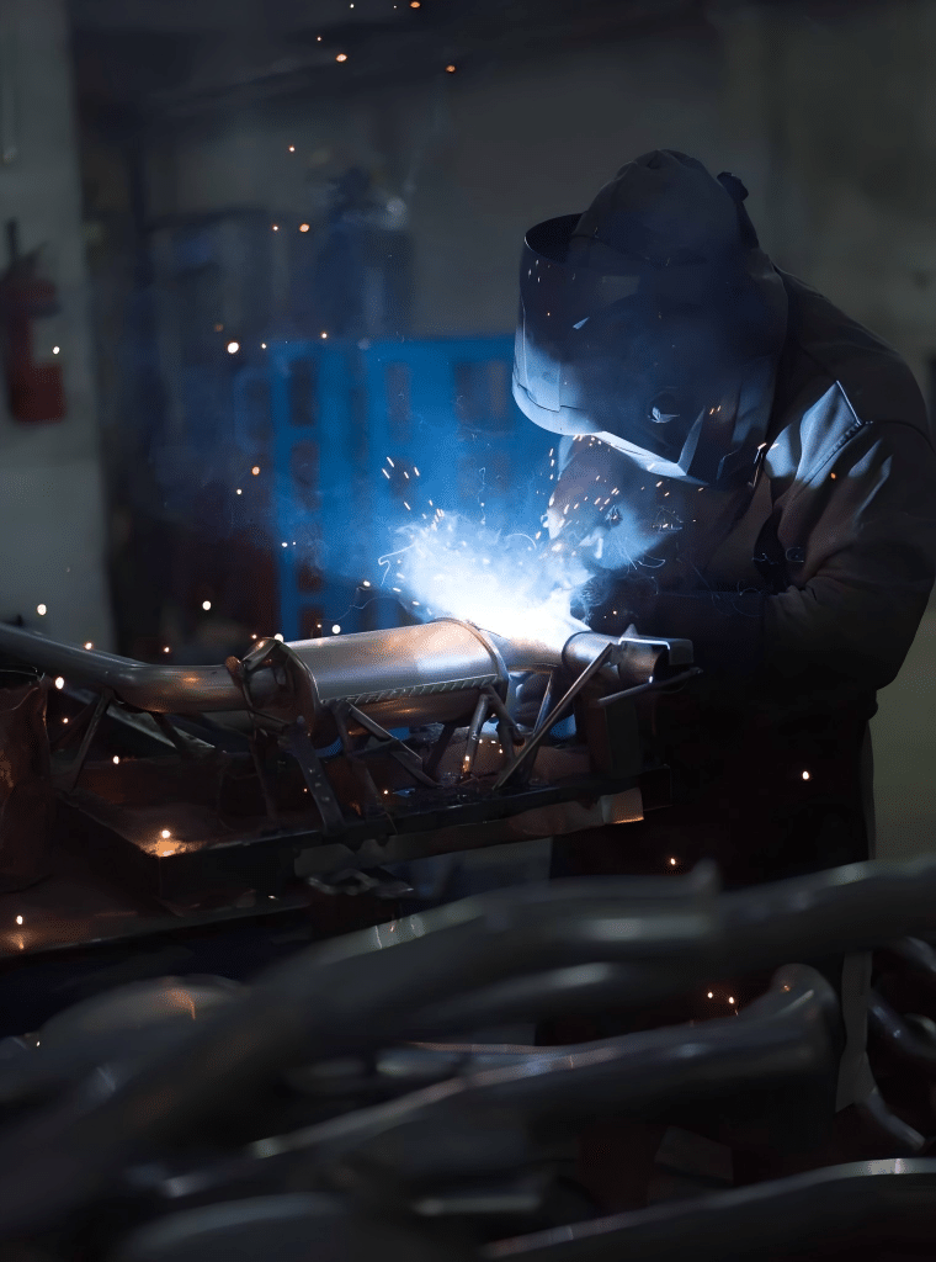
Engineering is evolving at a rapid pace. From electric vehicles to next-generation aircraft and smarter consumer electronics, manufacturers are under pressure to produce components that are lighter, stronger, more precise, and more efficient. Traditional welding methods, although still widely used, often struggle to meet these increasingly complex performance requirements. As industries shift toward automation, sustainability, and high-precision production, laser welding has emerged as a critical technology shaping the future of engineering.
Laser welding’s accuracy, speed, and low heat input make it an ideal process for next-generation manufacturing needs. Today, engineers rely on a laser welder not only for superior weld quality but also for its compatibility with digital automation, smart monitoring, and advanced lightweight materials. In this article, you’ll explore how laser welding is evolving and why it will play an even bigger role in the future of modern engineering.
Why Laser Welding Matters in the Future of Manufacturing
Before looking ahead, it’s important to understand the challenges engineers currently face:
- Growing demand for lightweight, high-strength components
- Need for energy-efficient, low-waste production methods
- Increasing reliance on automation and robotics
Laser welding meets these needs by offering precise energy delivery, minimal distortion, and repeatable performance across a wide range of metals and thicknesses.
Automation and Smart Manufacturing Technologies
As Industry 4.0 and digital manufacturing become standard across factories worldwide, laser welding is evolving to integrate seamlessly with intelligent systems.
How automation is enhancing laser welding:
- Robotic laser welding enables fast, highly repeatable welds ideal for mass production.
- AI-assisted process control automatically adjusts parameters based on real-time data.
- Machine learning models can predict weld defects before they occur.
- Digital twin technology simulates welding processes to reduce trial-and-error and improve R&D efficiency.
According to Deloitte, more than 86% of manufacturers aim to adopt smart factory technologies within the next five years making automated welding systems increasingly essential.
Growing Use of Lightweight Materials
As industries work to reduce energy consumption and emissions, the shift toward lightweight materials is accelerating. Laser welding is uniquely suited for metals that traditional welding methods struggle with.
Materials benefiting most from laser welding:
- Aluminum
- High-strength steel
- Stainless steel
- Titanium
- Nickel-based alloys
These materials are widely used in aerospace, automotive, defense, and medical engineering. With its small heat-affected zone and precise control, a laser welder can join these metals without causing excessive distortion, cracking, or warping.
Advances in Portable and Handheld Laser Welding
While industrial laser systems dominate automation, handheld laser welding is rapidly growing due to its versatility and ease of use.
Why handheld laser welding is gaining momentum:
- Increased need for on-site repairs in construction, shipbuilding, and heavy machinery
- Greater accessibility for small shops, fabricators, and service technicians
- Improved mobility thanks to lightweight fiber-laser technology
Portable systems are allowing engineers to perform high-quality welding in the field something that was difficult to achieve before.
Sustainability and Energy Efficiency in Welding
Global industries are prioritizing sustainability, and laser welding aligns well with green manufacturing goals.
Sustainability advantages include:
- Lower overall energy consumption compared to TIG/MIG
- Minimal consumables no filler wire or flux needed
- Significantly reduced waste and rework
- Cleaner emissions and improved worker safety
The International Energy Agency (IEA) projects that energy-efficient manufacturing will be one of the top contributors to global emissions reduction by 2030. Laser welding’s efficiency positions it as a key tool in that movement.
Precision for Emerging High-Tech Industries
Many of tomorrow’s breakthrough technologies rely on extremely small or extremely precise components. Laser welding is ideally suited for these emerging engineering fields:
Examples include:
- Semiconductors and microelectronics: Micro-welds on sensors, battery tabs, and connectors
- Medical devices: Clean, smooth welds on stainless steel and titanium surgical components
- Electric vehicles: Advanced battery modules and lightweight chassis structures
- Aerospace: Tight-tolerance parts for engines, fuel systems, and structural assemblies
As miniaturization and precision requirements increase, traditional welding methods cannot match the consistency of laser welding.
Small-Scale vs. Large-Scale Laser Welding in the Future
Laser welding will continue to expand across both small-scale and large-scale applications.
| Application Type | Future Trends | Industries Impacted |
| Small-Scale | Micro-welding, medical implants, microelectronics | Medical, electronics, biotech |
| Medium-Scale | Fabrication, EV parts, machinery components | Automotive, industrial, energy |
| Large-Scale | Robotic laser welding, high-volume production lines | Aerospace, automotive, defense |
Engineers will increasingly rely on flexible systems that adapt to different job sizes and materials.
AI-Driven Quality Assurance and Monitoring
Future laser welders will rely more heavily on advanced sensing and real-time monitoring systems.
Examples of next-generation monitoring tools:
- High-speed cameras capturing melt-pool behavior
- Infrared sensors tracking heat distribution
- Real-time analytics detecting anomalies or porosity
- Closed-loop control systems adjusting power, speed, and beam focus automatically
These tools will dramatically reduce weld failures and improve overall product reliability.
Integrating Laser Welding Into Fully Connected Production Lines
With the rise of smart factories, laser welding becomes an integral part of digitally connected production lines.
Engineers can expect:
- Centralized data dashboards
- Predictive maintenance systems
- Automated scheduling
- Cloud-stored welding parameters
- Unified communication between machines
This leads to more reliable production, fewer errors, and faster development cycles.
As laser welding continues advancing, many engineering teams are investing in equipment that supports long-term precision, efficiency, and automation readiness. Brands like Denaliweld offer durable, high-performance welding systems built to meet the needs of modern fabrication environments.
Conclusion
The future of laser welding is rich with potential. As engineering evolves toward automation, lightweight materials, sustainability, and advanced digital integration, laser welding stands out as one of the most adaptable and future-ready technologies available. Whether supporting next-generation electric vehicles, high-precision aerospace parts, or emerging microelectronic systems, a laser welder will continue to play a central role in shaping modern manufacturing.
By understanding upcoming trends and adopting best practices, you can position your operation to take full advantage of these advancements boosting productivity, improving product quality, and staying competitive in a rapidly changing engineering landscape.