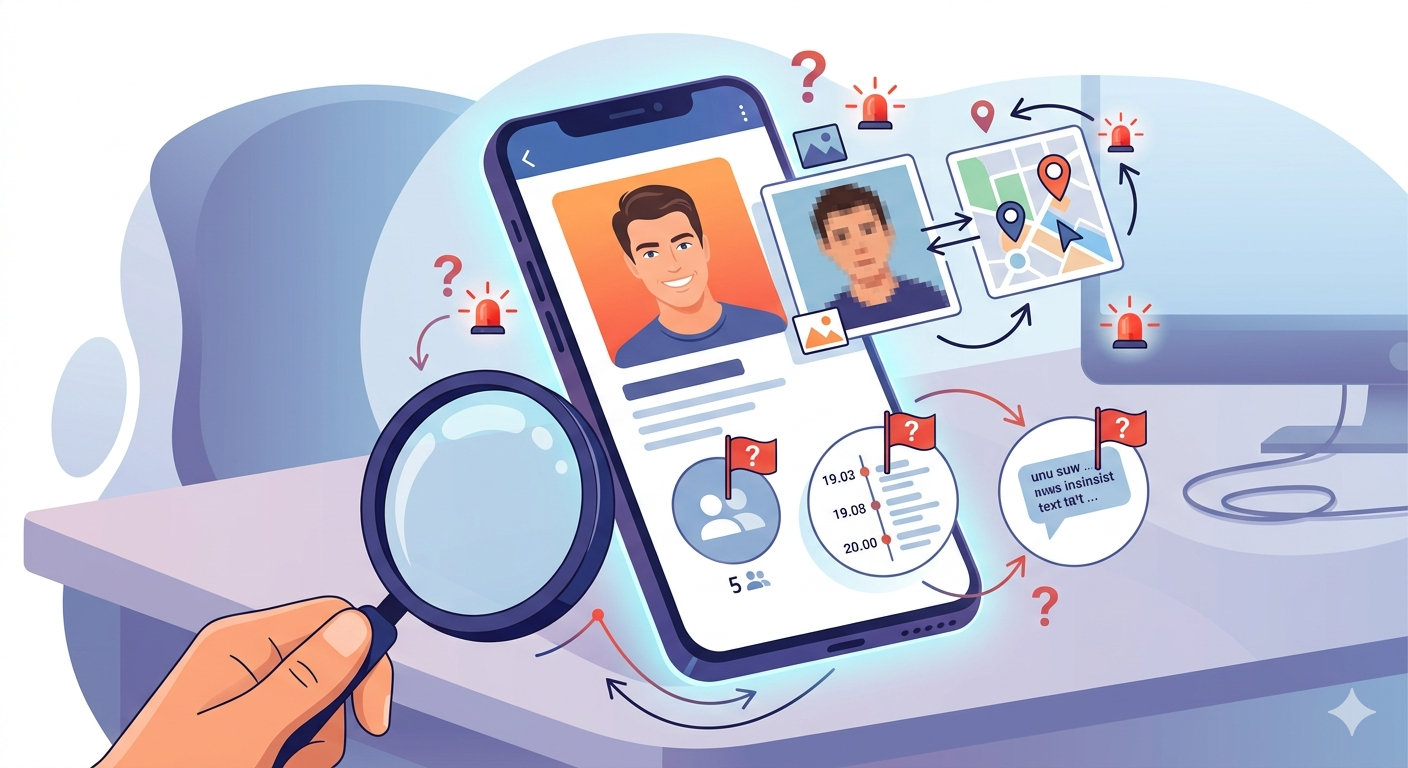
Due to the growing strength of digital transformation in industries, enterprises are increasing their reliance on online communication, distant authentication, and artificial intelligence-based operating processes. Although this transformation has enhanced efficiency and connectivity to all parts of the world, it has also enabled new security threats.
The emergence of the deepfake technology is among the most alarming dangers of the modern world. Deepfake attacks will keep evolving to even greater levels in 2026, so deepfake detecting software will be a crucial element of contemporary cybersecurity measures.
Deepfakes are the fake videos, audio and pictures produced using artificial intelligence to be incredibly realistic. Such manipulated media files may be utilized to identify with others, misinformation or even for fraud.
Consequently, the organizations are increasingly adopting sophisticated detection systems to safeguard their activities and online confidence.
The Increasing Dangers of Deepfakes in the Business World
Attacks by using deepfakes have become a major threat to the business world. As executives, workers, and customers communicate using the digital platform, attackers are more likely to use identity vulnerabilities. Executive impersonation is one of the most widespread threats.
Attackers apply AI generated sounds or videos to impersonate an executive of a company and direct their workers to send money or provide company secrets. Such attacks are very convincing and they are mostly successful since they utilize trust and not a technical vulnerability.
Customer fraud is another problem that is on the increase. Onboarding systems can be bypassed using fake identities created using deepfakes, or financial services and customer support systems may be manipulated using such. Lack of proper detection mechanism means that businesses may lose money and their reputations.
It is at this point that the situation where a deepfake detection software is invaluable to detect and prevent the use of synthetic media before it becomes exploited.
Deepfake Detection Software What Is It?
Deepfake detection software is a security solution specific to digital content that processes the data and identifies any presence of an artificially created or manipulated piece of work. It employs novel machine learning models that are trained on big datasets of authentic and deceitful media to recognize discrepancies that signify interference.
The software compares various aspects like facial recognition, movement, light sources, audio synchronization and pixel- based anomalies. It is able to detect suspicious content by comparing the patterns with the existing properties of real media.
Deepfake detection software is applicable to large-volume digital data every day as compared to manual review methods, thus it is scalable and the software is able to work automatically on a large scale.
The reason why Deepfake Attacks are growing in 2026
The 2026 threat frontier due to deepfakes is increasing because of several reasons. First, there is greater access to AI tools. Several open-source systems can be used today by individuals with little technical skills to produce plausible synthetic media. Second, deepfakes have become of exceptionally high quality.
The first iterations of deepfakes could be identified with a fair amount of ease by visual glitches or unnatural motions. However the contemporary models generate results that are so realistic and hard to be detected by both human beings and conventional security systems.
Third, digital communication and remote work enlarged the attack surface. As employees are turning to video-calling and messaging applications extensively, as well as systems of online verification, attackers are finding increased chances to use synthetic media.
All these reasons put Best deepfake detection software a significant investment in an organization that wants to secure its place against the growing cyber threats.
The functioning of Deepfake Detection Software
Deepfake detection software uses multiple layers of analysis to detect manipulated media. Facial analysis is one of the methods in which the system observes the micro-expressions, eye movement and facial symmetry. Deepfakes are also not very effective at imitating human behavior in all its natural manners.
The other technique is the temporal analysis technique which examines the manner in which frames within a video transform with time. Variations in motion or sequence of the frames can give a clue of manipulation.
Audio analysis is in common use as well. The system verifies the absence of unnatural speech patterns and or missing background noise or the odd pitch changes characteristic of most synthetic voice recordings.
Also, frequency analysis can be used to identify digital artifacts that are not perceivable by the human eye but exist in AI-created media. These methods used together enable Deepfake identified software to detect even the most complex manipulations.
Application of AI in Deepfake Detection
Artificial intelligence is at the core of contemporary detection algorithms. ai deep fake detection software is based on a neural network that has to identify minor changes between authentic and fraudulent media.
These systems are constantly learning and updating themselves to increase accuracy with time. Along with the progress of the deepfake generation methods, AI models evolve to track new trends of modification.
This process of continuous learning is necessary due to the constant development of deepfake technology. The old techniques of static detections cannot deal with the new forms of threats.
Significance of Deepfake Detection in Business Security
Deepfake detection software is increasingly forming a very important component of enterprise security systems. Companies are now very dependent on online communication and this exposes them to identity based attacks. Fraud prevention is one of the main applications to the detection systems. A business will be able to check whether a user is an authentic individual or a virtual impersonation by examining video calls or uploaded media.
Another important application is data protection. Deepfakes may be used to phenol snakeworm a group of workers in disclosing delicate data or unauthorized access. Detection systems will be used to mitigate this risk by detecting suspicious content in real time.
The reputation management is also a major consideration. One incident of deepfakes of a brand or an executive will become viral quickly and may result in a negative impact on reputation in the long term. These risks are mitigated through early detection.
Practical Applications in Industries
In different industries, the use of deepfake detection software increases the level of security and trust. It is applied in banking and finance to authenticate the identity of customers when onboarding them remotely and thwarting fraud when performing transactions.
One of the most targeted industries in the case of deepfake attacks is the financial institutions. It can be used in healthcare to guarantee patient data safety and to authenticate telemedicine appointments. This is especially necessary in the security of confidential medical records.
It is employed in the corporate world to check inside communications and eliminate executive impersonation frauds. The workers are trained to use detection systems at the initial stage before responding to suspicious requests.
Detection tools have been applied by media and journalism houses to ensure that misinformation is not distributed via news channels by them by first validating the content of the video before release.
Deepfake Detection Problems
Nevertheless, deepfake detection software remains to have a number of challenges despite its progress. Among them, there is the fact that deepfake generation models are constantly being improved. Detection systems continue to improve and with this advancement, attackers create more realistic synthetic media.
Processing speed is another problem. Live video call and streaming platform detection will require real-time, yet to analyze high-resolution content urgently, long powerful processing is required.
False positives can as well be problematic. Authentic content can be treated as fake occasionally, disrupting the running of business. Another aspect that is to be taken into consideration is privacy, particularly in the analysis of biometric information or high-level communications.
Future of Deepfake Detection Software
It is believed that more sophisticated AI systems and combined security systems will shape the future of deepfake detection software. Another emerging trend is real-time detection as it applies to communication systems. This will enable businesses to establish authenticity over live interactions without affecting the working processes.
The other development is multimodal detection whereby video, audio, and behavioral information is examined jointly to achieve greater accuracy. We also expect more usage of cloud based detection systems which enable businesses to efficiently scale security operations. With threats of deepfakes constantly developing, Best deepfake detection software is going to become a prerequisite to enterprise-level cybersecurity.
Conclusion
Deepfake threats are also predicted to become even more advanced, widespread, and hard to detect manually in the year 2026. Enterprises can not use old systems of security to be able to fight against identity theft and fake news.
The use of deep fake detection software stops fake media at a key defense level by detection and deterring misuse of such software. Organizations, with the assistance of Deepfake detection software, Best deepfake detection software and ai deepfake detection software are able to substantially enhance their protection posture.
The further development of digital interactions is also associated with the necessity to invest in sophisticated detection systems to preserve trust, address the data protection issues, and guarantee business security in the long run.