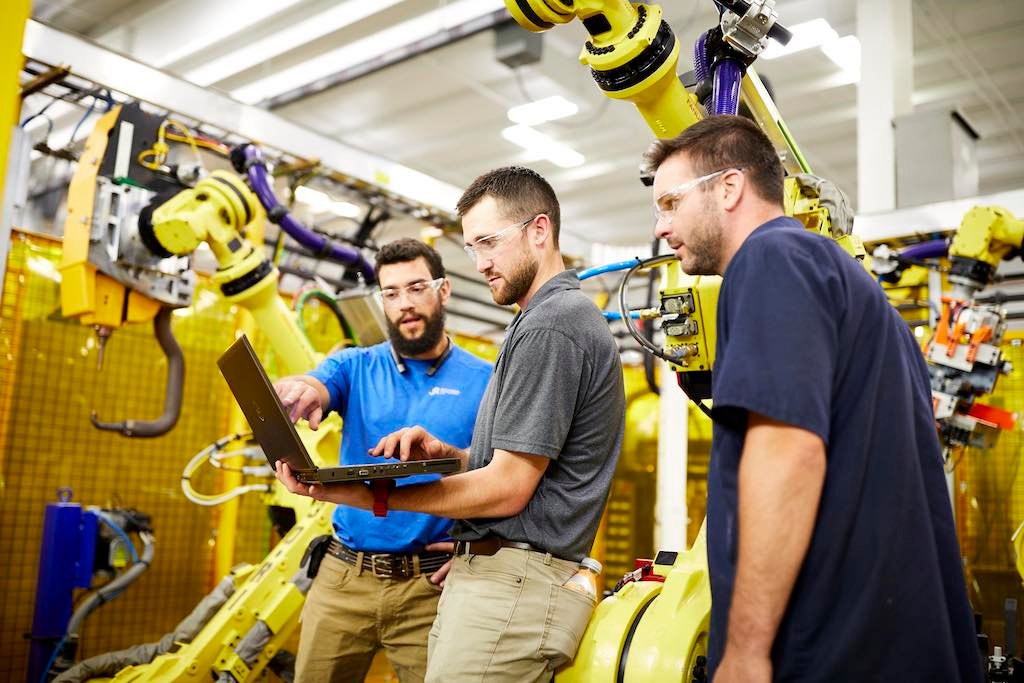
It should be noted that the introduction of automation in construction is a reality, not an abstract concept. Indeed, modern construction projects are characterized by the emergence of new approaches to project completion and monitoring that are based on advanced technologies. One cannot help but note that construction sites become more complex and interconnected because of the introduction of automation.
However, even today’s most advanced and efficient automation cannot exist without a vital piece of equipment called the air compressor. As the name implies, compressors provide air supply and have a significant impact on various operations performed at a construction site.
Air Compressors and Automated Construction
As already mentioned, pneumatic systems using compressors are extensively used in the building industry. Additionally, it should be stressed that using compressors can bring benefits compared to conventional hydraulic systems. Firstly, one should point out that air compressors can work effectively even in harsh weather conditions, being quite easy to service. This is why they are very suitable for automatic locations, especially when time is crucial.
Automation implies tight tolerances and synchronized workflows. Consequently, a stable and high-quality compressed-air supply is necessary for construction projects based on automation techniques. Compressors and other components of the pneumatic systems help to ensure this necessity.
The Mechanical Basis of Automation
The key idea behind automation is repeatability. As far as pneumatic systems powered by air compressors are concerned, the repetition is achieved due to air pressure regulation. Thanks to the appropriate pressure, tools can act consistently and precisely, performing all kinds of tasks, including robotic material handling and automated drilling.
Pneumatic systems can be considered superior to their electrical counterparts since, due to their nature, they tend to heat up less and be able to operate continually. Furthermore, compressors can be easily integrated into a PLC-driven system with sensors to monitor pressure.
Enhancing Efficiency Across Equipment Ecosystems
Current construction sites have an extensive list of equipment, most of which are equipped with pneumatic elements. Automated nailers, concrete spraying, and compaction machines require a steady flow of air. These devices, once installed in an automated system, would be powered by the use of compressors to provide an equal level of productivity throughout the site.
The importance of such interconnectedness is especially evident when discussing logistics and construction machinery. In the mid-stage of project development, acquisition decisions, such as procuring a Thwaites dumper, become highly dependent on compatibility with an automated system. Although dump trucks rely heavily on hydraulic technology, auxiliary systems, such as braking and control, may sometimes interface with compressed air systems. An accurate calibration of compressors will help prevent potential discrepancies between the two types of systems.
The use of automation means that even slight inconsistencies can lead to more significant disruptions. The function of compressors helps to eliminate the problem, ensuring that pressure remains constant and allowing the equipment to perform within acceptable levels of accuracy.
Supporting Data-Driven Site Management
Automation involves an even balance between data collection and machine function. Sensors embedded into compressors supply data on their efficiency, measured by parameters like pressure, temperature, and energy use. The information received is used by management systems at large, providing guidance for decisions at the level of operation and strategy.
One of the biggest benefits offered by such integration is predictive maintenance. By studying the performance of the compressor, management can predict any problems and arrange for preventive maintenance during scheduled maintenance periods. Adjustable speeds and smart control prove useful in automatic production where energy usage is carefully tracked.
Enabling Safer Working Environments
Safety is also one of the important concerns in construction, and automation can facilitate its enhancement through reducing some risks inherent in manual labor. By providing power to the tools that perform work in hazardous conditions, compressors enable automating some of these activities, which leads to reduced accidents.
Furthermore, pneumatic systems are less prone to sparking and short circuits, thus being safer than electrical systems in certain circumstances. This quality makes the use of compressors highly beneficial when building facilities in places with potentially combustible substances. With time and as automation advances further, the safety aspect of compressed air systems will become even more important.
Integration with Advanced Machinery
The last stage in the process of automation involves combining compressors with advanced building machines. An example of such a device could be the Vogele paver, which reflects the current state of the industry in that the machines can perform certain processes with accuracy and little human involvement. Although all such devices feature complicated electronic control mechanisms, as well as hydraulics, they usually receive assistance in auxiliary operations, from simple handling of materials to more complicated system calibration using pneumatic devices.
As already mentioned, scalability is one of the major qualities that define automated construction. Projects should have the ability to grow or shrink depending on the situation without causing disruption. Compressors help achieve this by adapting to changing demands, including oscillating capacities.
Thus, compressors help to ensure continuity in this process and, therefore, make the whole machinery operation more efficient. As an example of precision work, asphalt paving could be affected by even slight variations during the manufacturing process, which would require stable compressed air supply and thus increase the significance of compressors in the context of automation.
Conclusion
The move towards automated construction sites is dictated by the requirements of efficiency, safety, and scalability. Under these conditions, air compressors acquire increasing importance as basic units of automated machinery that allow for providing steady and controlled energy resources. These machines are able to support various applications and provide the basis for other technologies.