Moving to a new home can feel exciting, but the actual moving day is usually more tiring than people expect. Boxes pile up quickly. Furniture takes longer to move than planned. Small items get mixed together. By the end of the day, even simple tasks like carrying kitchen supplies or storage bins can feel exhausting.
Most moving stress does not come from one large item. It often comes from repeated lifting, long walking distances, stairs, elevators, tight hallways, and not having the right tools ready. Whether you are moving into an apartment, a dorm, a townhouse, or a first home, the right preparation can make the process much easier on your body and your schedule.
Moving Is More Than Packing Boxes
Many people spend a lot of time choosing boxes, tape, and labels, but forget to think about the actual transport. Packing is only one part of the job. Every box still has to be moved from one room to another, carried to a vehicle, loaded, unloaded, and carried again into the new space.
This is where moving day becomes physically demanding. A box of clothes may be light, but a box of books, dishes, tools, or small appliances can be much heavier than it looks. When these loads are carried by hand over and over again, fatigue builds quickly. That fatigue can lead to dropped boxes, strained muscles, or damaged items.
Small Moves Still Need Smart Tools
Not every move requires a full professional moving crew. Many people handle short distance moves on their own, especially when moving between apartments, relocating to a dorm, changing offices, or moving items into storage. These smaller moves may seem manageable at first, but they still involve heavy and awkward loads.
A mini fridge, printer, storage bin, suitcase, bookshelf, or box of kitchenware can be difficult to carry through parking lots, elevators, stairwells, and narrow doors. Even if the item is not extremely heavy, its shape can make it hard to hold safely.
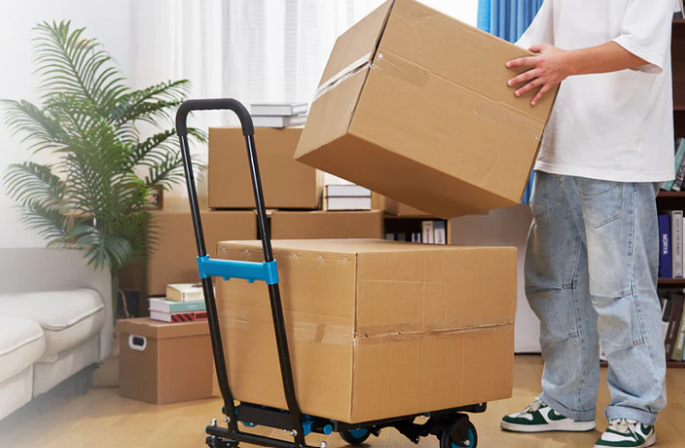
For these situations, a folding hand truck can be a practical moving companion. It helps reduce the number of trips, keeps heavy items off your arms and back, and makes it easier to move stacked boxes or bulky household items. Because it folds down, it is also easy to store in a car trunk, closet, garage, or storage room after the move.
Better Organization Saves Time
A smoother move starts before the first box leaves the house. Group items by room and label each box clearly. Keep heavier items in smaller boxes so they are easier to lift and stack. Place fragile items in separate containers and avoid mixing them with tools, books, or other dense objects.
It also helps to create a clear loading order. Items needed first, such as bedding, toiletries, chargers, basic cookware, and cleaning supplies, should be easy to access. Large and heavy items should be loaded carefully so they do not crush smaller boxes.
When boxes are organized well, unloading becomes much faster. You can move each box directly to the right room instead of stacking everything in the entryway and sorting it later.
Protect Your Body and Your Belongings
Moving day often turns into a race, but rushing can create problems. Lift with care, keep your path clear, and avoid twisting your body while carrying heavy items. If something feels too heavy or unstable, do not force it. Use moving equipment or ask another person to help.
Floors, walls, and door frames also need protection. Heavy boxes and furniture can scratch surfaces or leave marks when moved through tight spaces. Moving blankets, cardboard, and careful handling can help prevent damage.
A stable moving setup protects both people and belongings. It also reduces the chance of accidents when moving through crowded hallways, apartment buildings, or storage facilities.
Final Thoughts
Moving day does not have to be chaotic. With better planning, clear labeling, smart loading, and the right moving support, the process can feel more controlled from start to finish.
For anyone handling a small move, apartment move, dorm move, or storage move, compact tools can make a real difference. They help reduce repeated lifting, save time, and make heavy items easier to manage. A move is already a big transition. The physical work should not be harder than it needs to be.